
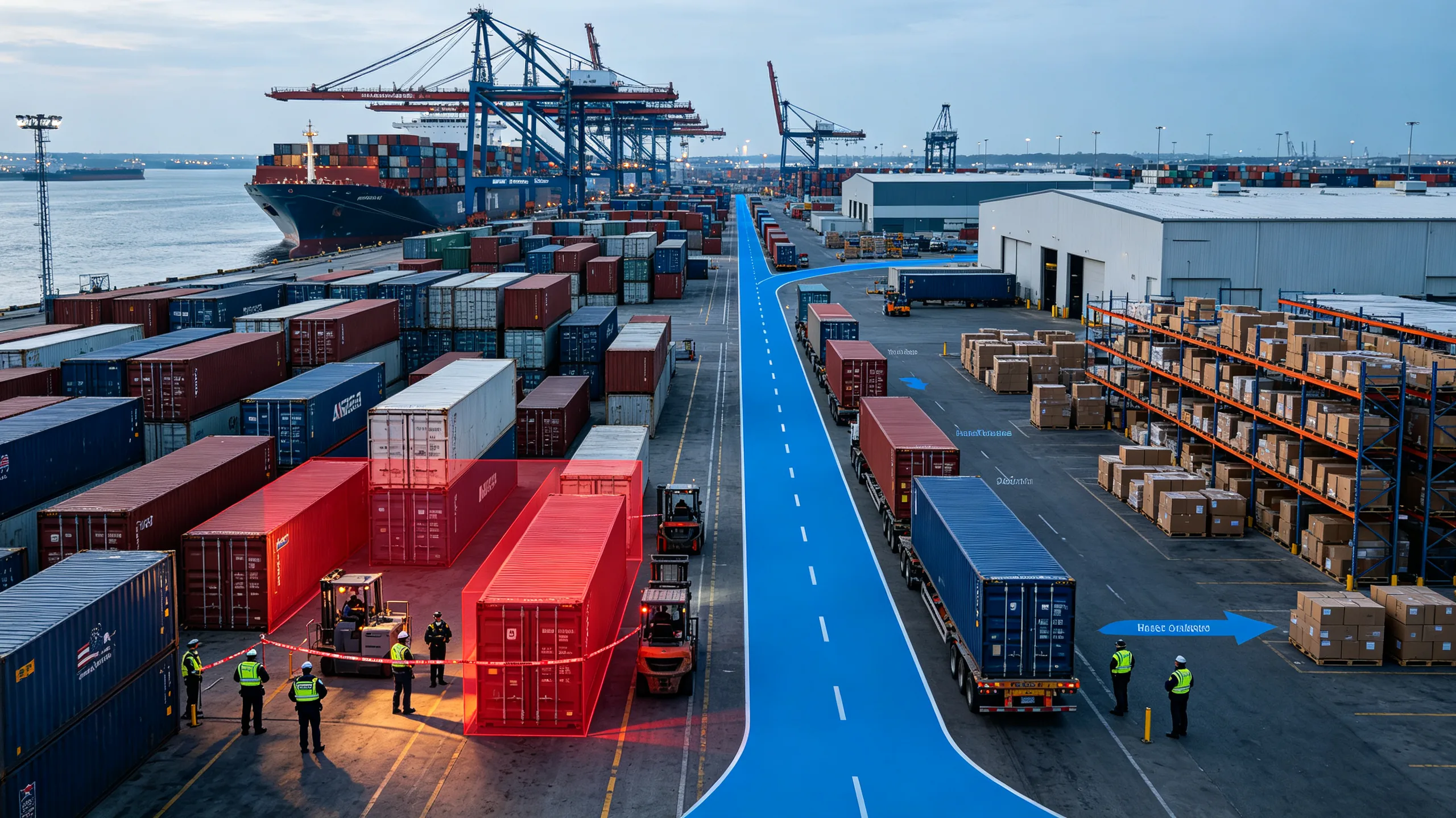
Shipping Shopify parcels directly from China costs more than most store owners expect. Common errors — wrong HS codes, missing customs documents, and unbudgeted carrier surcharges — can add $10–$30 per order and delay delivery by weeks.
What are the most expensive mistakes when shipping Shopify parcels from China?
The most costly mistakes all come from underestimating import compliance and dimensional weight charges. Store owners who price orders without these costs lose margin on nearly every sale.
Dimensional weight (DIM weight) is a billing method carriers use. They charge by the larger of actual weight or volumetric weight, which is calculated from package length, width and height. Light but bulky items, such as clothing or cushions, often trigger DIM weight charges that are much higher than expected. Without checking carrier DIM formulas before quoting shipping, sellers absorb this cost themselves.
Why do customs classification errors cause the biggest financial damage?
Wrong customs classification can lead to shipment holds, unexpected duties, and penalties that wipe out an entire order’s profit. Getting the HS code right is the single most important compliance step for direct-from-China shipments.
HS code is the Harmonized System code used to classify goods for customs worldwide. Each product category has a specific HS code that determines its duty rate. For example, a cotton T-shirt and a wool sweater carry different codes and different duties. When sellers use a vague or incorrect code to save time, customs may reclassify the item, apply a higher rate, and fine the importer. A mistake on a $20 order can trigger fees several times the product value.
How do missing or incomplete customs documents delay your shipments?
Missing customs documentation is the fastest way to get a Shopify parcel stuck at the border. Customs will not release cargo without a complete commercial invoice, accurate value declaration, and correct recipient details.
A commercial invoice is the customs document that lists the goods, their value, and the seller and buyer information. Under-declaring value to reduce duties is a common but illegal practice. Customs systems flag values that look inconsistent with the product type, which leads to inspection and delays. Store owners should also confirm whether the destination country requires an importer of record (IOR) — the legal entity responsible for the import — because missing this detail can stop clearance entirely.
Which carrier surcharges and fees are most often overlooked?
Store owners frequently miss peak-season surcharges, fuel adjustments, and remote-area fees that appear after the parcel is booked. These add-ons can raise the final cost by 15–30% beyond the quoted base rate.
|
Fee type |
When it applies |
Typical impact |
How to avoid surprises |
|
Dimensional weight charge |
Bulky lightweight parcels |
Up to 2× base cost |
Use flat-rate or repacked boxes |
|
Fuel surcharge |
Varies monthly |
3–20% of base rate |
Request quotes including current fuel |
|
Peak-season surcharge |
Holiday and Q4 periods |
$1–$5 per parcel |
Plan bulk shipments in off-season |
|
Remote-area delivery fee |
Non-urban postal codes |
Fixed extra charge |
Confirm destination zone before order |
Carrier fees change frequently, and quotations without these items are incomplete. Asking for a full landed-cost quote before shipment — the total cost including product, shipping, duties and all surcharges — helps store owners price orders correctly.
What steps can you take to avoid these costly errors?
Store owners can prevent most errors by standardizing their shipping workflow before orders are placed.
1. Verify HS codes against official customs sources before listing a product for sale.
2. Prepare a complete commercial invoice with accurate value and product descriptions.
3. Request a landed-cost quote that includes duties, surcharges, and remote-area fees.
4. Measure and weigh packaged goods to check dimensional weight before choosing a carrier.
5. Confirm the destination’s import requirements, including IOR and VAT rules, in advance.
These five steps reduce the risk of holds, penalties, and margin loss without adding significant time to your operation.
Frequently Asked Questions
Q1: Can I declare a lower value on the commercial invoice to save on duties?
A1: No. Under-declaring value to reduce duties is illegal and can lead to customs fines, cargo seizure, and a permanent compliance record against your business.
Q2: How do I find the correct HS code for my products?
A2: Use the customs database of your destination country or consult a licensed customs broker. Never guess a code, because misclassification carries direct financial risk.
Q3: Should I always use DDP for Shopify direct-from-China shipping?
A3: DDP (delivered duty paid) transfers duty responsibility to the logistics provider, which simplifies the buyer’s experience but may hide higher costs. Compare DDP and DAP (delivered at place) quotes before choosing.
Q4: How much extra time should I budget for customs clearance?
A4: Plan for 2–7 extra days beyond the carrier transit time. Peak seasons and incomplete documents extend clearance more than average.
Conclusion
Shipping Shopify parcels directly from China can remain profitable when sellers control compliance and cost. The biggest losses come from incorrect HS codes, missing customs documents, and overlooked carrier surcharges. Store owners who verify product classification, prepare complete invoices, and request full landed-cost quotes protect their margins and avoid delivery delays.
Easy China Warehouse (ECW) supports DTC store owners with consolidated bulk shipping from China, including customs documentation support, to help Shopify sellers ship reliably without hidden cost surprises.
Contact us: [email protected] Follow our blog for more DTC ecommerce and cross-border logistics guidance.