
Freight forwarding
Top Freight Forwarding Agent in China
We offer international freight forwarding services for e-commerce companies from China to Europe, North America, and Asia
We will get your cargo loaded in three days or less. We’re also capable of handling urgent requests for faster loading times as needed. As an international freight forwarder in China, we use local logistics, knowledge and the most qualified partners to offer the most competitive rates. We deliver your goods on time and without extraneous hidden fees.
Easy China Warehouse is your best Amazon FBA freight forwarder in China
What does a freight forwarder do?
A freight forwarder arranges the movement of your cargo without owning the ship or aircraft. It books space, consolidates shipments, prepares documentation and coordinates customs clearance. FIATA calls the forwarder the “architect of transport”.
Freight forwarder
Arranges the movement — books space, consolidates cargo, handles documentation, and coordinates the other parties. FIATA calls the forwarder the “architect of transport”: it organises the shipment but does not own the ship or aircraft.
Source: FIATA
Carrier
Owns and operates the vessel or aircraft. In US regulation a vessel-operating common carrier is distinct from an NVOCC, which buys space from carriers and issues its own house bill of lading without operating any ships.
Source: US Federal Maritime Commission, Shipping Act of 1984
Customs broker
Licensed to submit entry information and payment to customs on an importer’s behalf. CBP requires expertise in entry procedures, admissibility, classification, valuation and duty rates. There are roughly 16,170 active licensed customs brokers in the United States.
Source: US Customs and Border Protection
How long does shipping from China take?
Sea freight runs about two weeks from Shanghai to Los Angeles and around a month or more to the US east coast and northern Europe. Rail to Europe takes roughly two and a half weeks. Express courier is measured in days.
| From | Los Angeles | New York | Rotterdam | Hamburg |
|---|---|---|---|---|
| Shanghai | 14 | 33 | 37 | 41 |
| Ningbo | 14 | 38 | 42 | 42 |
| Yantian | 15 | 37 | 34 | 37 |
| Qingdao | 21 | 35 | 55 | 43 |
| Xiamen | 18 | 36 | 39 | 40 |
Rail to Europe
Xi’an to Duisburg takes 15–17 days; Yiwu to Duisburg takes 18–20 days, per DB Cargo Eurasia. That sits between sea and air on both speed and cost.
Express courier
- FedEx states International Priority reaches the US, Canada and Mexico from mainland China within one to two business days, and major European markets within two business days. (FedEx Newsroom, June 2023)
- UPS groups Worldwide Express and Worldwide Express Saver from southern China into a 1–3 day service tier, and Worldwide Expedited into a 3–5 day tier. (UPS Rate and Service Guide, Southern China Mainland, effective 22 December 2024)
We have deliberately not published a single “air freight takes N days” figure. No carrier publishes a China-to-US or China-to-Europe lane transit time — DHL directs shippers to its own live lookup tool instead. Ask for a quote against your actual origin and destination.
What does freight from China cost?
Ocean is priced per container, air per kilo. As of 16 July 2026, Drewry's World Container Index composite was $4,547 per 40ft container. Air from China to North America was $6.56/kg in the week of 8 July 2026.
| Lane | Rate |
|---|---|
| Shanghai → Los Angeles | $6,272 |
| Shanghai → New York | $7,879 |
| Shanghai → Rotterdam | $4,873 |
| Shanghai → Genoa | $6,300 |
Volumetric weight: why bulky cargo costs more
Air freight and express charge on whichever is greater, actual weight or volumetric weight. UPS, FedEx and DHL all divide the shipment's volume in cubic centimetres by 5,000 to get volumetric kilos. Light, bulky cargo is therefore billed well above its scale weight, which is why packaging efficiency changes an air freight bill more than most sellers expect.
Container capacity
| Type | Capacity | Max payload |
|---|---|---|
| 20GP | 33.0–33.2 m³ | 28,130–28,330 kg |
| 40GP | 67.6–67.8 m³ | 26,700–28,860 kg |
| 40HQ | 76.2–76.4 m³ | 28,200–28,800 kg |
| 45HC | 85–86 m³ | 25,780–27,850 kg |
What customs rules apply in 2026?
Two changes this year matter more than anything else for cross-border sellers: the US has suspended its $800 de minimis exemption, and the EU has replaced its €150 duty relief with a flat €3 per item.
- The US $800 de minimis exemption is suspended. CBP suspended it for merchandise arriving through every mode — including the international postal network — under two interim final rules effective 24 June 2026. Shipments that previously entered duty-free under $800 now require a formal or informal entry and are liable for duty. (19 CFR 10.151(b) and 19 CFR 145.31(b); 91 FR 37789 and 91 FR 37801, effective 24 June 2026)
- Shipments valued at $2,500 or less may be entered under informal entry; above that, formal entry applies. (19 CFR 143.21(a), current regulation)
- Importer Security Filing (“10+2”) must be filed no later than 24 hours before cargo is laden aboard the vessel at the foreign port. It applies to ocean cargo only, not air. (19 CFR 149.2; US Customs and Border Protection, current regulation)
- The EU abolished its €150 customs duty relief on 1 July 2026. Until 1 July 2028 a flat €3 duty per item applies to consignments with an intrinsic value up to €150 where VAT is handled through IOSS or the goods arrive by post. (Council Regulation (EU) 2026/382, applies from 1 July 2026)
- EU import VAT applies to goods of any value — the old €22 exemption was abolished in 2021. IOSS covers distance sales of imported goods in consignments not exceeding €150. (European Commission, Taxation and Customs Union, in force since 1 July 2021)
SEA freight forwarding
- Competitive ocean freight and stable container space under contract
- We consolidate multiple customers product to the same destination to lower destination charges for LCL
- We charge a below market local fee to shippers under FOB terms
- Free warehouse storage for two weeks when consolidating containers from multiple factories
- LCL direct container shipments to many of the most popular Amazon FBA warehouses
- Door to door service

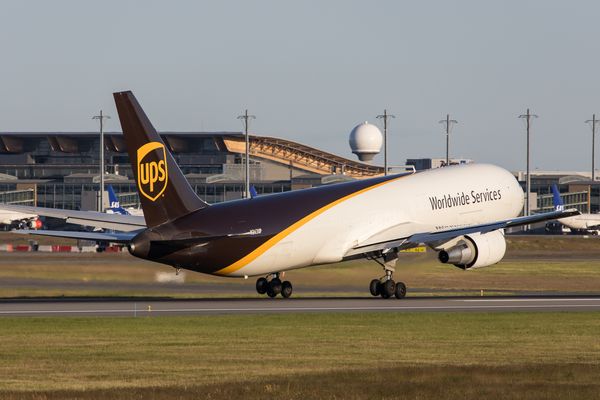
AIR freight forwarding
- Competitive air freight based on BSA (blocked space agreement) pricing with airlines
- Guaranteed cargo space even during Q4 peak season
- Route your cargo to the most suitable airport based on your factories location and delivery address
- Special Hazardous goods shipping lines available
Road/Rail freight forwarding
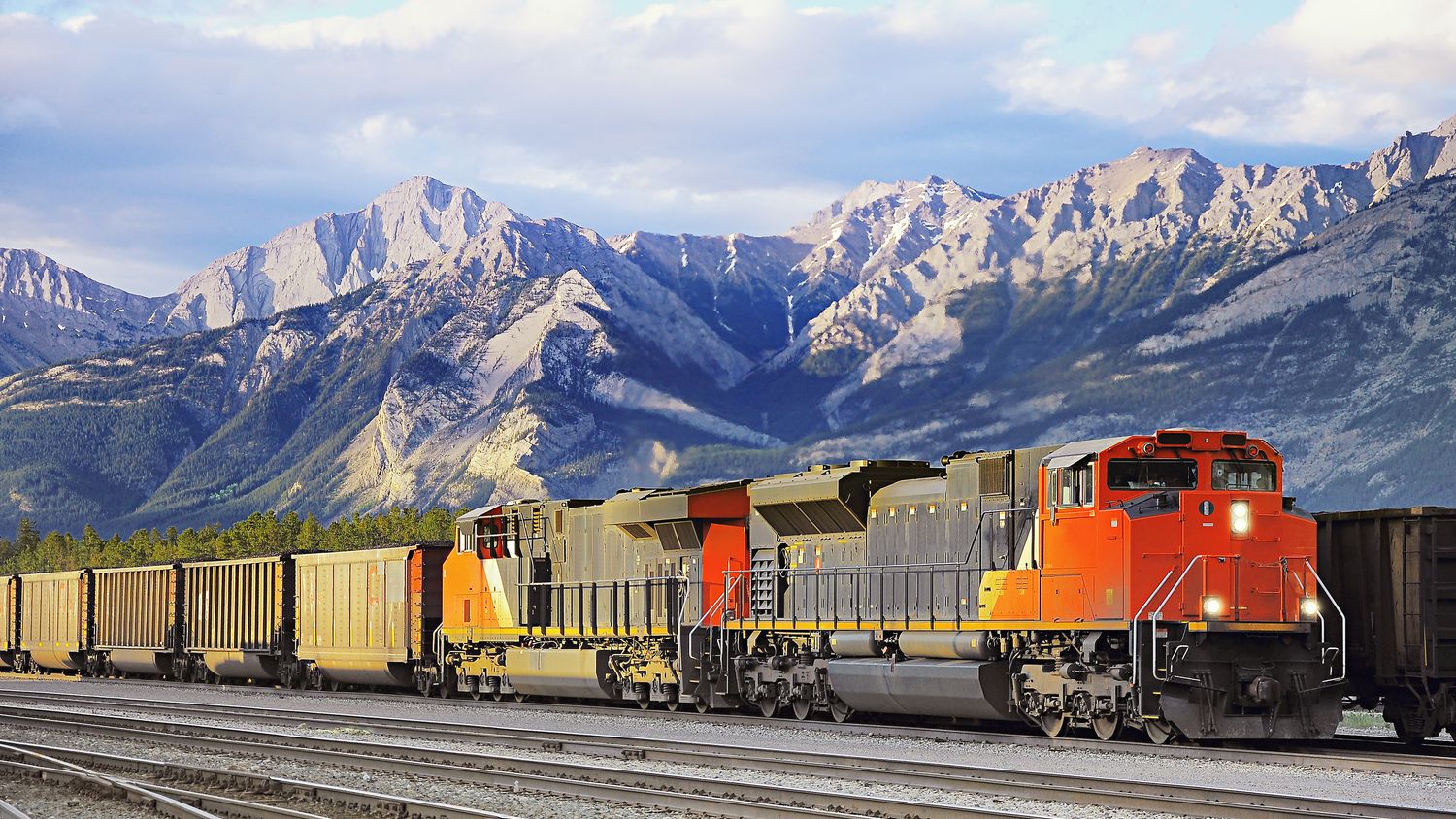
- Direct truck forwarding from China to Europe. Slightly slower than Air Freight but much more cost effective
- Direct rail shipments from China to Europe. Faster than Sea and comparable in price
Additional Freight and Logistics Services:

- Warehousing
- China Freight Insurance
- Pickup and delivery
- Kitting
- Carton Inspection
- Product and Carton Labeling
- Consolidation
- Repackaging
Freight forwarding from China: common questions
What does a freight forwarder actually do?
A freight forwarder arranges the movement of your cargo without owning the ship or aircraft. It books space with carriers, consolidates shipments, prepares the documentation, and coordinates customs clearance and inland delivery. FIATA describes the forwarder as the “architect of transport”. A carrier, by contrast, operates the vessel itself, and a customs broker is separately licensed to file entries with customs.
How long does sea freight take from China to the US?
Hapag-Lloyd publishes 14 days Shanghai to Los Angeles and 33 days Shanghai to New York, port to port, in its 2026 East-West network schedule dated 1 September 2025. West coast ports are consistently faster than east coast. These are scheduled port-to-port times and exclude inland transport, customs clearance and any port congestion.
Why is shipping to Europe taking so long right now?
Carriers are routing Asia to Europe around the Cape of Good Hope instead of through the Suez Canal. Hapag-Lloyd's published transit times on that routing run 34 to 42 days from major Chinese ports to North European ports, against roughly a month via Suez. The carrier states its 2026 network is built on a Cape routing and is subject to change if Red Sea passage becomes safe again.
Is the $800 US de minimis exemption still available?
No. US Customs and Border Protection suspended the $800 de minimis exemption for merchandise arriving through every mode, including the international postal network, under two interim final rules effective 24 June 2026. Shipments that previously cleared duty-free under $800 now require an entry and are liable for duty. Note that several published summaries wrongly state only non-postal modes were affected.
What changed for low-value shipments into the EU?
The EU abolished its €150 customs duty relief on 1 July 2026 under Council Regulation (EU) 2026/382. Until 1 July 2028 a flat €3 duty per item applies instead, for consignments with an intrinsic value up to €150 where VAT is accounted for through IOSS or the goods arrive by post. Import VAT itself already applied to goods of any value; the €22 VAT exemption was abolished back in 2021.
How much does a container hold?
A 20ft general-purpose container holds roughly 33 cubic metres with a payload around 28 tonnes. A 40ft holds roughly 68 cubic metres and a 40ft high cube roughly 76 cubic metres, both with payloads in the region of 27 to 29 tonnes. Exact tare and payload vary by container series and by carrier, so treat published figures as ranges rather than fixed numbers.
How is air freight weight calculated?
Air freight and express are charged on whichever is greater: actual weight or volumetric weight. UPS, FedEx and DHL all divide the shipment's cubic centimetres by 5,000 to get volumetric weight in kilograms. Bulky, light cargo is therefore charged well above its scale weight, which is why packaging efficiency matters so much on air shipments.
What are freight rates doing at the moment?
As of 16 July 2026, Drewry's World Container Index composite stood at $4,547 per 40ft container, with Shanghai to Los Angeles at $6,272 and Shanghai to New York at $7,879. Drewry noted the peak-season upward momentum was beginning to subside. Air rates China to North America were $6.56 per kg in the week of 8 July 2026 per the Freightos Air Index. Rates move weekly, so always ask for a live quote.
Ready to move your inventory?
Tell us your factory address, your product, and the FBA warehouse code. We'll come back with a clear, itemised quote and handle the rest.