
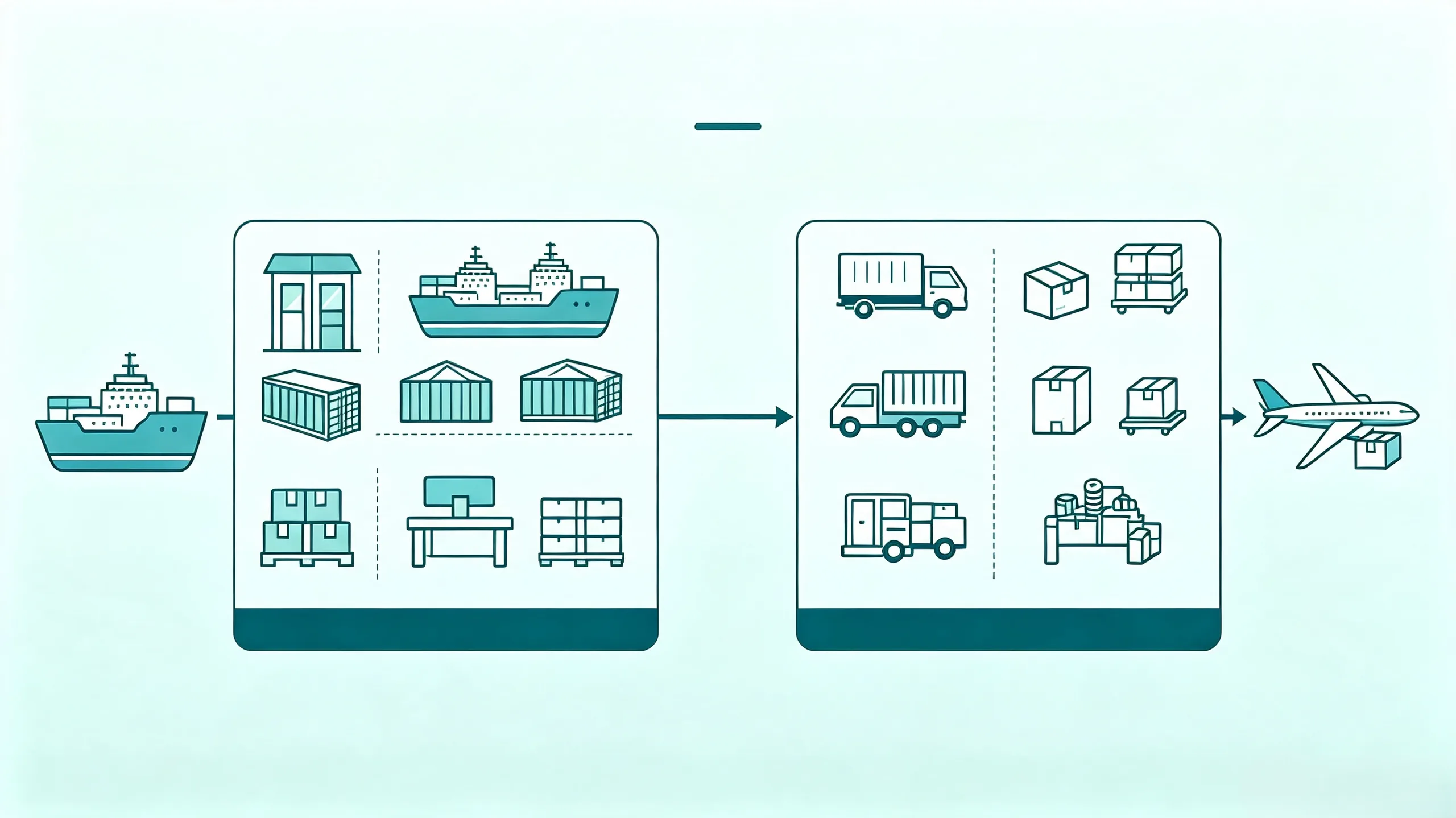
Bonded and non‑bonded consolidation warehouses handle multi‑supplier cargo for Amazon FBA and cross‑border sellers, but they differ in customs supervision, tax rules and operating flexibility. Your business scale and export mode decide which option fits you.
What is a bonded consolidation warehouse in China?
A bonded consolidation warehouse is a storage facility supervised by Chinese customs. Goods stored here remain under customs control before formal export. Sellers can consolidate shipments from multiple suppliers, complete labeling, sorting and repacking, then declare for export in one batch. No domestic VAT settlement is required while cargo stays inside the bonded zone. This facility suits sellers who need tax‑linked export operations.
What is a non‑bonded consolidation warehouse in China?
A non‑bonded consolidation warehouse, also called a general consolidation warehouse, operates outside customs special supervision zones. Most cross‑border sellers use this model. Suppliers deliver goods directly to the warehouse. The provider completes consolidation, FBA prep, label sticking and packing work. Cargo will go through standard domestic procedures before export customs declaration. Easy China Warehouse (ECW) mainly runs non‑bonded consolidation services for global sellers sourcing from China.
Bonded vs non‑bonded consolidation warehouse: key practical differences
| Comparison Item | Bonded Consolidation Warehouse | Non‑Bonded Consolidation Warehouse |
|---|---|---|
| Customs Supervision | Full customs supervision | General commercial management |
| Domestic VAT | VAT suspended inside bonded zone | Follow normal domestic tax process |
| Multi‑supplier receiving | Accept factory deliveries into bonded area | Direct receiving from domestic suppliers |
| FBA prep service | Labeling, sorting, repacking available | Full‑range prep: FNSKU label, carton sticker, repack, inspection |
| Operating lead time | More document steps, longer turnaround | Fewer formalities, faster turnaround |
| Typical user | Enterprises requiring bonded export tax procedures | Amazon FBA, DTC sellers, small‑and‑mid traders |
When should you choose a bonded consolidation warehouse?
Pick a bonded consolidation warehouse if you need special bonded‑mode export clearance. It helps manage tax‑related export flows. Keep in mind extra document requirements will extend your overall lead time. You need to confirm all suppliers support delivery into customs‑supervised bonded zones before planning shipments.
When should you choose a non‑bonded consolidation warehouse?
Most Amazon FBA and DTC sellers fit non‑bonded consolidation services. You receive flexible receiving from dozens of domestic suppliers, finish all inbound prep work locally, then ship LCL (less than container load) or FCL (full container load) cargo to overseas markets. Less administrative work brings faster handling speed for regular cross‑border shipments.
Frequently Asked Questions
Can I switch between bonded and non‑bonded consolidation services for one shipment?
No. Once goods enter a bonded warehouse, they cannot move freely to a general non‑bonded warehouse without formal customs procedures. Plan warehouse type before suppliers send out goods.
Does bonded warehouse always mean lower total cost?
Not always. Bonded operations produce extra document and handling fees. Total cost depends on your tax structure and export compliance requirements. Do not select bonded warehouses only for assumed cost savings.
Will warehouse choice affect Amazon FBA inbound performance?
Warehouse type itself does not change Amazon FBA receiving rules. But delayed consolidation or document errors will cause shipment delays that hurt your inbound timeline.
Final Thought
Selecting between bonded and non‑bonded consolidation storage shapes your tax handling, lead time and total logistics spend. Most cross‑border ecommerce sellers benefit more from non‑bonded consolidation for regular Amazon FBA shipments. Bonded facilities make sense only when your business requires customs‑bonded export procedures.
If you want to evaluate consolidation options for your supplier shipments to Amazon FBA or other global channels, our team can walk through your real‑world cargo scenario.
For reliable consolidation and FBA preparation solutions from China, reach us: [email protected]
Follow our blog for more practical cross‑border logistics guidance.