
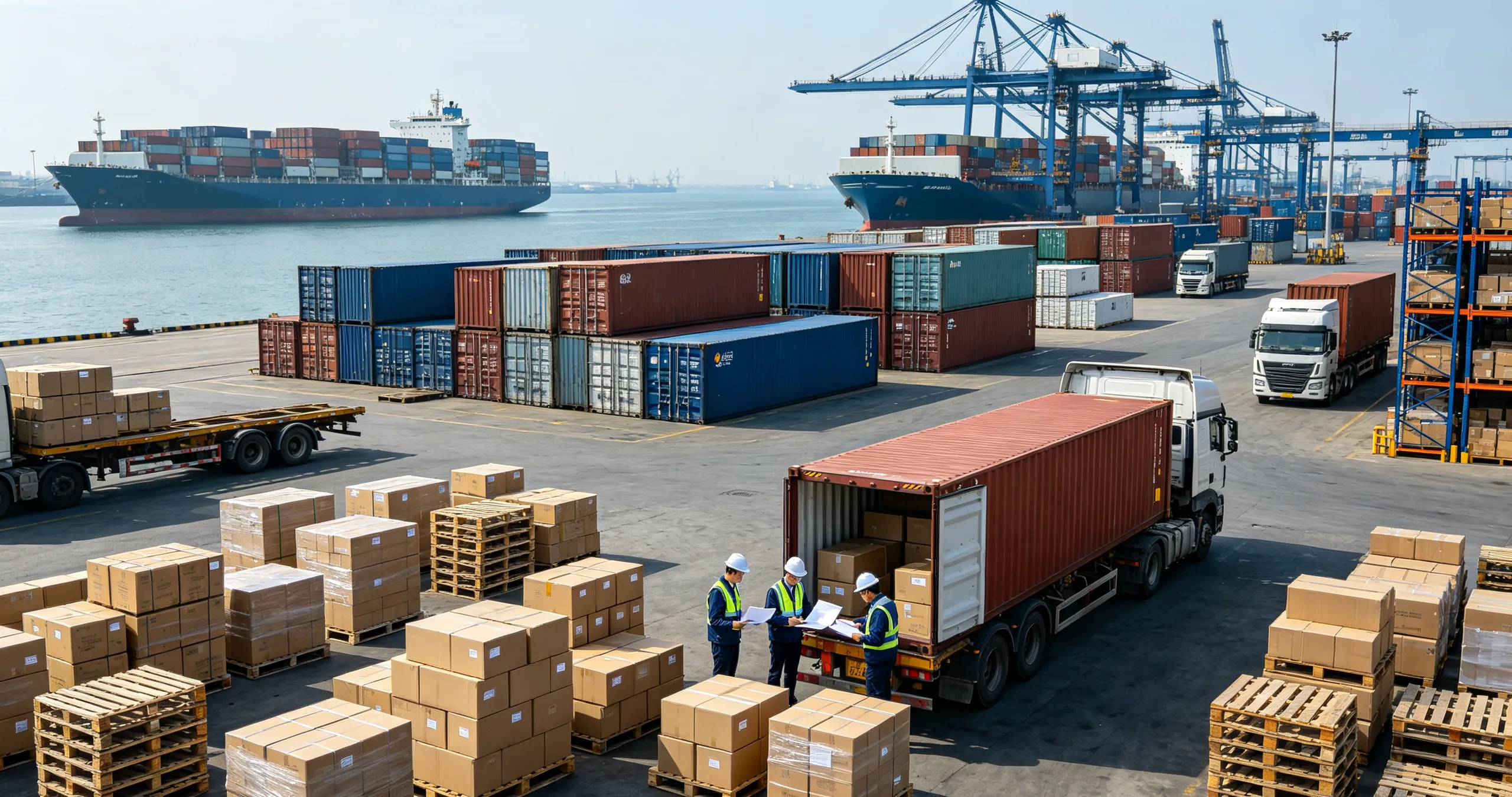
Professional China freight forwarding unifies supplier cargo collection, documentation and delivery, eliminating repeated fees and delays for B2B bulk import shipments.
1. What makes B2B bulk shipping from China more complex than regular shipments?
B2B bulk shipments involve multi-supplier cargo, large order volumes and formal customs declaration procedures, bringing unique operational challenges different from small e-commerce parcels. Most B2B buyers source goods from 3–10 Chinese factories separately. Independent shipping from each supplier generates multiple booking fees, customs charges and delivery schedules, raising overall logistics costs and management difficulty. Bulk cargo also has stricter container utilization and document consistency requirements; mismatched declaration data will trigger customs audits and cargo detention, disrupting overall import schedules.
2. What core forwarding modes apply to B2B bulk shipments from China?
Two mainstream shipping modes cover all B2B bulk scenarios, including full container load (FCL) and less than container load (LCL), which are the basic logistics terms for bulk cargo transportation.
Full container load (FCL) refers to exclusive use of one 20GP or 40GP container for independent bulk orders, with no cargo sharing with other shippers. It features fewer handling steps, lower damage risk and stable transit time, suitable for large-volume orders above 15 CBM. Less than container load (LCL) means combining multiple buyers’ cargo into one shared container. It fits batch orders of 2–15 CBM and avoids wasted container space, the most cost-effective choice for medium and small B2B bulk purchases (Winsail Logistics, November 2025).
3. How does freight forwarding streamline your B2B bulk shipping workflow?
Reliable forwarding providers simplify fragmented bulk shipping processes into one controllable workflow, solving core pain points of B2B buyers. Professional teams complete unified cargo consolidation, document sorting, customs declaration and delivery arrangement. Buyers only need to confirm total order details instead of coordinating each supplier’s shipping progress separately. This centralized mode cuts redundant operational work, unifies declaration standards, and reduces the probability of customs inspection caused by inconsistent data.
4. FCL vs LCL: Which bulk shipping mode suits your B2B business?
The two bulk shipping modes differ greatly in cost, timeline and risk. You can select the optimal solution according to your cargo volume and delivery deadline.
|
Comparison Item |
FCL (Full Container Load) |
LCL (Less Than Container Load) |
|
Applicable Volume |
Over 15 CBM, large-batch bulk orders |
2–15 CBM, medium and small bulk orders |
|
Unit Cost |
Low unit cost for large volumes |
No idle space waste, flexible cost |
|
Cargo Risk |
Low, independent container without mixed goods contact |
Slightly higher, multiple shipper cargo mixed in one container |
|
Transit Stability |
High stability, fixed schedule |
Subject to container consolidation schedule |
5. What key details do B2B buyers need to avoid bulk shipping failures?
Most bulk shipment delays and extra losses stem from neglected standardized details rather than route problems. First, unify commodity HS codes and declaration values for multi-supplier goods to eliminate data conflicts. Second, confirm container weight and size limits in advance to avoid port overweight surcharges. Third, arrange shipment plans 2–4 weeks ahead of peak shipping seasons to prevent capacity shortages and premium freight increases (Alibaba Seller Central, September 2026).
6. FAQ for B2B China Bulk Freight Forwarding
Q1: Is LCL shipping safe for B2B bulk consumer goods?
Yes. Standard LCL consolidation and inspection processes can ensure cargo safety. Buyers only need to complete outer packaging reinforcement for fragile goods.
Q2: How can B2B buyers reduce bulk shipping costs steadily?
Long-term volume cooperation and multi-supplier cargo consolidation effectively lower unit freight and document handling fees, achieving stable cost optimization.
Q3: Does bulk forwarding support DDP door-to-door delivery?
Yes. Professional forwarding services support delivered duty paid (DDP) terms, covering customs clearance and tax payment to simplify buyer operations.
Q4: How long does standard China bulk sea freight take?
Major routes take 18–38 days. The specific timeline depends on destination port and shipping schedule (China Top Freight, June 2026).
Q5: What documents are mandatory for B2B bulk customs declaration?
Commercial invoice, packing list, bill of lading and commodity certification documents are essential to ensure smooth customs clearance.
Final Thought
Streamlining China B2B bulk freight forwarding relies on standardized consolidation, mode matching and document management, not blind price comparison. Optimized forwarding workflows effectively cut redundant logistics costs and stabilize delivery timelines for your bulk import business. Easy China Warehouse (ECW) provides professional bulk cargo consolidation and forwarding solutions, adapting to FCL and LCL shipping demands for global B2B buyers.
If you need customized bulk shipment planning, freight mode selection or one-stop forwarding consultation, our professional team can provide accurate solutions based on your cargo volume and delivery cycle.
Contact us: [email protected]
Follow our blog for more practical B2B cross-border logistics optimization tips!