
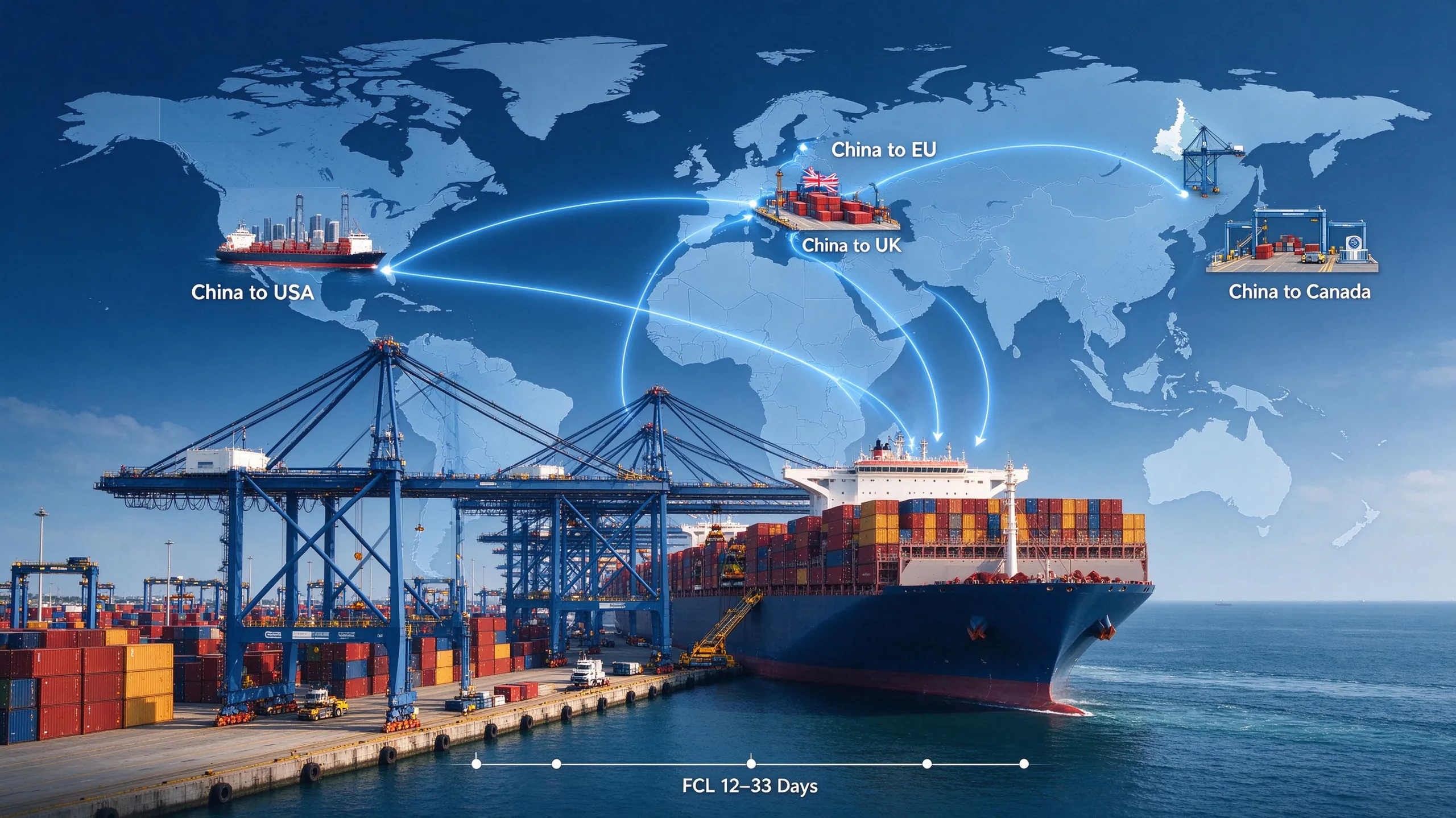
Pick the correct main lane based on transit time and cost; FCL (full container load) and LCL (less than container load) follow fixed port-to-port corridors for China outbound shipments.
Which main shipping lanes run from China to the USA?
Two core transpacific lanes serve US inbound cargo, split into West Coast and East Coast routes. The US West Coast lane connects China’s major ports to Los Angeles and Long Beach, with FCL transit time of 12–15 days. This lane carries most Amazon FBA cargo due to fast sailing and frequent weekly sailings. The US East Coast lane uses the Panama Canal to reach New York, Savannah and Charleston; FCL transit takes 25–30 days. Cargo for eastern US FBA warehouses usually takes this route. Most carriers operate both lanes; express services cut transit time by 2–3 days with a 30%–50% rate premium. You must separate FCL and LCL bookings, as consolidation only runs on standard sailings, not express vessels.
What are the top China-to-EU shipping corridors?
All EU ocean freight runs on the Suez Canal main lane to North European base ports, including Rotterdam, Hamburg and Antwerp. Standard FCL transit lasts 28–33 days. When Red Sea traffic faces disruption, carriers reroute vessels around the Cape of Good Hope, adding 10–14 extra days to the schedule. A seasonal Arctic route operates from June to September, reaching UK and North Europe ports in just 20 days for high-value e-commerce goods. Mediterranean ports including Genoa and Barcelona use the same Suez routing with 25–30 day transit. FBA sellers shipping to European Amazon fulfilment centres mostly book sailings to Hamburg or Rotterdam, then move cargo inland via short sea or rail.
Which shipping lanes connect China to the UK?
UK shipments use two fixed entry ports: Felixstowe and Southampton, both on the Suez Canal route. Standard FCL transit runs 25–28 days under normal conditions. Cape rerouting extends lead time to 35–42 days. The seasonal Arctic fast lane from Ningbo to Felixstowe cuts sailing time down to 20 days during summer months. LCL consolidation sailings run slower than direct FCL, with lead times of 26–32 days. UK FBA inbound cargo mostly lands at Felixstowe, the busiest container port for China-origin e-commerce shipments. You should confirm routing with your forwarder before booking to avoid unexpected Cape detours.
What are the primary China-to-Canada shipping lanes?
Canada inbound ocean freight splits into West Coast and East Coast lanes. The West Coast lane lands at Vancouver, with FCL transit time of 14–18 days. Most Chinese e-commerce sellers choose this port, as CBSA inspection queues are shorter than eastern ports. The East Coast route reaches Montreal and Halifax via the Panama Canal, with 28–35 day transit. LCL cargo always consolidates at Vancouver first before moving east by rail. All commercial shipments to Canada require CARM pre-registration before vessel arrival, regardless of which lane you select. This rule applies to both FCL and LCL consignments starting May 2025, per CBSA official notices.
Main Shipping Lanes Comparison Table
|
Destination |
Primary Ports |
FCL Transit |
Key Risk |
Preferred Cargo |
|
USA West Coast |
Los Angeles, Long Beach |
12–15 days |
Port congestion |
Amazon FBA west warehouses |
|
USA East Coast |
New York, Savannah |
25–30 days |
Panama Canal waiting |
Eastern US bulk goods |
|
EU North Europe |
Rotterdam, Hamburg |
28–33 days |
Red Sea rerouting |
EU FBA bulk shipments |
|
United Kingdom |
Felixstowe, Southampton |
25–28 days |
Cape detour delay |
UK Shopify & FBA stock |
|
Canada West Coast |
Vancouver |
14–18 days |
CARM incomplete filing |
Canadian e-commerce parcels |
|
Canada East Coast |
Montreal, Halifax |
28–35 days |
Long inland rail time |
Eastern Canada bulk orders |
How do you pick the right lane for Amazon FBA shipments?
Match your lane to the fulfilment centre location first. For US west Amazon warehouses, book direct sailings to LA/Long Beach. For UK and German FBA sites, stick to Suez direct sailings and avoid Cape rerouting in peak season. You can choose express sailings only if you have strict delivery deadlines, as premium rates increase total logistics cost. Split high-risk SKUs into separate LCL shipments so one inspection does not hold up the whole container. Always confirm sailing routing with your freight forwarder 30 days before cargo departure, especially between October and December each year.
Frequently Asked Questions
Q1: What do FCL and LCL mean for new sellers? A1: FCL stands for full container load, which means you book an entire 20GP or 40HQ container. LCL means less than container load, where multiple shippers share one container with consolidation service.
Q2: Why do UK shipments face longer delays in 2026? A2: Red Sea shipping disruption forces many vessels to take the Cape route, adding 10–14 days of extra sailing time.
Q3: Which Canadian port has the fastest customs clearance? A3: Vancouver delivers faster CBSA release; western port inspection waiting time is shorter than Montreal on the east coast.
Q4: Can I use the Arctic fast lane all year round? A4: No. The Arctic route only operates from June to September when ice conditions permit navigation.
Q5: Do express transpacific sailings offer LCL consolidation? A5: No. Express services only accept full container bookings; LCL cargo can only use standard weekly sailings.
Conclusion
All China outbound freight forwarding follows fixed transpacific and Suez Canal shipping lanes. US west coast, EU North Europe, UK Felixstowe and Vancouver Canada are the top four corridors for Amazon FBA and Shopify e-commerce sellers. Always align port selection with your warehouse location, confirm routing to avoid Cape detours, and complete CARM filings before shipping to Canada. Correct lane selection cuts transit delay and lowers total landed cost for cross-border inventory.
Easy China Warehouse (ECW) provides FCL and LCL freight forwarding on all these main lanes. Check our FBA inbound shipping service for door-to-port and door-to-door delivery from China to North America and Europe.