
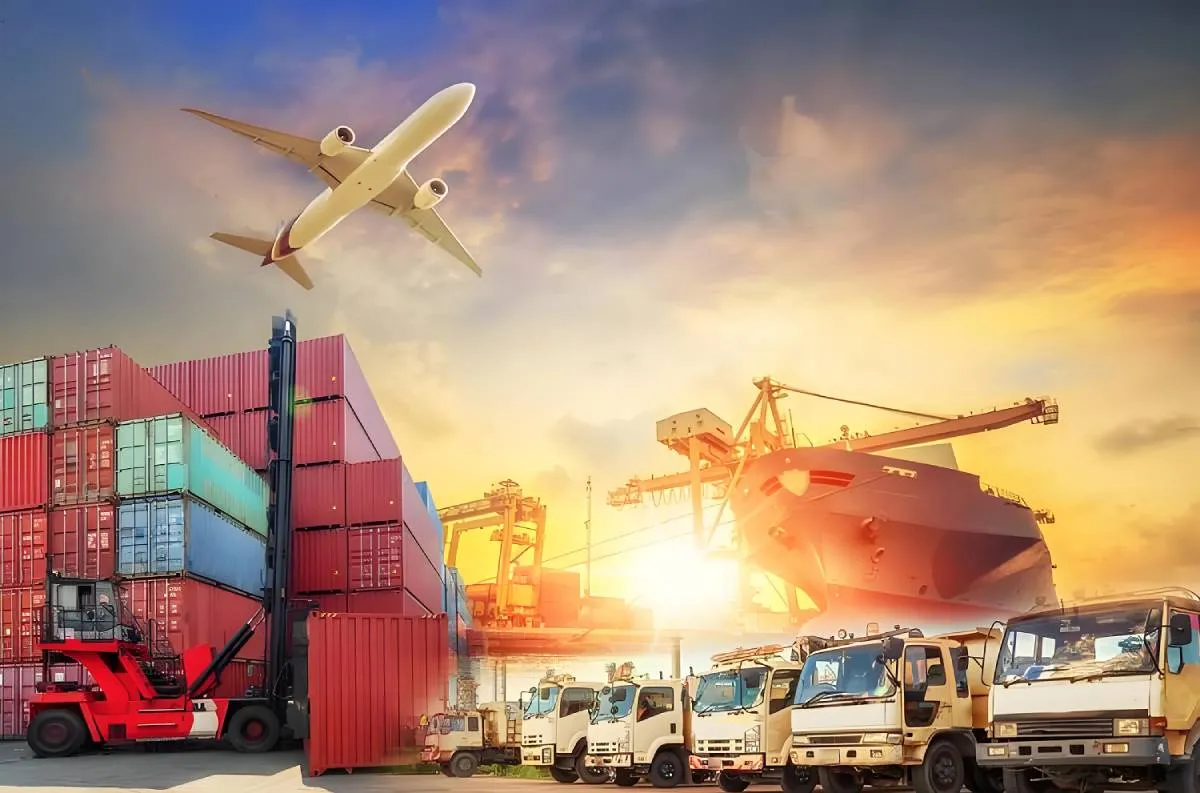
Cross-border logistics is the process of moving goods from a seller in one country to a buyer in another — covering export clearance, international transport, customs entry at the destination, and final delivery. For e-commerce sellers shipping from China, it is everything that happens between your factory and your customer.
What does cross-border logistics involve?
Domestic shipping is one carrier and one set of rules. Cross-border shipping adds three things that catch sellers out:
- Two customs authorities. Goods must be cleared for export from China and cleared for import at the destination. Either can hold a shipment.
- Duty and tax liability. Someone has to pay import duty and VAT or sales tax, and the terms of sale decide who.
- A handover between carriers. The freight leg and the last-mile delivery are usually different companies, and shipments get lost in the gap between them.
Air, sea, rail or truck: which should you use?
Choose on transit time first, then cost. The figures below are published by carriers and operators — note that transit times are schedules, not guarantees.
| Method | Published transit time | Relative cost | Best for |
|---|---|---|---|
| Express courier | 1–3 days (UPS service tier, southern China) | Highest | Samples, urgent restocks, small parcels |
| Air freight | Carriers do not publish lane transit times — ask for a quote against your actual route | High | High-value or time-critical cargo |
| Rail (to Europe) | 15–17 days Xi’an to Duisburg; 18–20 days Yiwu to Duisburg | Middle | Europe-bound freight that is too slow by sea, too costly by air |
| Sea freight | 14 days Shanghai to Los Angeles; 33 days to New York; 37 days to Rotterdam | Lowest | Bulk restocks planned in advance |
Why sea freight to Europe looks slow right now. Carriers are routing Asia to Europe around the Cape of Good Hope instead of through the Suez Canal, which adds roughly a week to ten days. Hapag-Lloyd states its 2026 network is built on a Cape routing and is subject to change if Red Sea passage becomes safe again.
What does cross-border logistics cost?
Sea freight is priced per container, air freight per kilogram, so the two are not directly comparable without knowing how dense your cargo is.
- Ocean: Drewry’s World Container Index composite stood at $4,547 per 40ft container as of 16 July 2026, with Shanghai to Los Angeles at $6,272 and Shanghai to New York at $7,879.
- Air: China to North America was $6.56 per kg in the week of 8 July 2026, per the Freightos Air Index.
Rates move weekly and are volatile at the moment, so treat these as scale rather than a budget. Beyond the freight rate itself, the costs that surprise sellers most are customs duty, destination handling charges, and demurrage when a container sits at port.
Volumetric weight. Air and express carriers charge on whichever is greater: actual weight or volumetric weight. UPS, FedEx and DHL all divide the shipment’s volume in cubic centimetres by 5,000 to get volumetric kilos. Bulky, light cargo is billed well above its scale weight, which is why packaging efficiency changes an air freight bill more than most sellers expect.
Duty and customs: what changed in 2026
Two changes this year matter more than anything else for cross-border sellers:
- The US $800 de minimis exemption is suspended. US Customs and Border Protection suspended it for goods arriving through every mode, including the international postal network, under two interim final rules effective 24 June 2026. Shipments that previously cleared duty-free under $800 now need an entry and are liable for duty. (19 CFR 10.151(b))
- The EU replaced its €150 duty relief with a flat €3 per item. Council Regulation (EU) 2026/382 abolished the relief on 1 July 2026; the €3 charge applies until 1 July 2028 on consignments up to €150 where VAT is handled through IOSS or the goods arrive by post. (EUR-Lex)
How to choose your logistics method
Four factors decide it, in this order:
Transit time
If fast delivery is the priority, air freight is quickest, followed by trucking. Sea freight is the slowest but the most cost-effective for shipments you can plan ahead.
Transportation cost
Air freight is the most expensive, then trucking, then sea freight. Weigh the saving against the cost of holding stock longer while it is in transit.
Product characteristics
Fragile, hazardous, oversized or temperature-sensitive goods narrow your options before cost does. Sensitive goods in particular attract customs inspection and need the right documentation.
Destination coverage
Not every method reaches every destination directly. Rail serves Europe well and North America not at all; some inland destinations need a road leg on the end whichever method you pick.
Cross-border logistics: common questions
What is cross-border logistics?
Cross-border logistics is the process of moving goods from a seller in one country to a buyer in another. It covers export clearance in the origin country, international transport by sea, air, rail or road, customs entry at the destination, and final delivery to the customer. It differs from domestic shipping mainly in that two customs authorities are involved and someone must pay import duty and tax.
What is the cheapest cross-border shipping method?
Sea freight is the cheapest per unit for volume shipments. As of 16 July 2026 the Drewry World Container Index composite was $4,547 per 40ft container, which across a full container works out far below air freight at $6.56 per kg China to North America. The trade-off is time: 14 days Shanghai to Los Angeles and 33 days to New York, port to port.
How long does cross-border shipping from China take?
Express courier is 1 to 3 days on UPS’s published service tiers. Rail to Europe runs 15 to 20 days depending on the route. Sea freight is around 14 days to the US west coast, 33 days to the east coast and 37 days or more to northern Europe. Air freight is faster than sea but carriers do not publish lane transit times, so ask for a quote against your actual route.
What does cross-border logistics cost?
Freight is only part of it. Budget for the freight rate itself, customs duty and import VAT or sales tax, destination handling charges, and any demurrage if the container waits at port. Air and express also charge on volumetric weight — volume in cubic centimetres divided by 5,000 — so bulky light cargo costs more than its scale weight suggests.
Who pays the import duty?
It depends on your terms of sale. Under DDP (Delivered Duty Paid) the seller covers duty and taxes and the goods arrive with nothing owed. Under other terms the buyer or importer of record pays on arrival. Getting this wrong is a common cause of refused deliveries, so agree it before the goods ship.
Is the US $800 de minimis exemption still available?
No. US Customs and Border Protection suspended the $800 de minimis exemption for merchandise arriving through every mode, including the international postal network, under two interim final rules effective 24 June 2026. Shipments that previously cleared duty-free under $800 now require an entry and are liable for duty. Several published summaries wrongly state that only non-postal modes were affected.
One-Stop Cross-Border Logistics Solutions
Easy China Warehouse handles the whole chain from our Shenzhen warehouse: consolidation, FBA and WFS prep, export clearance, freight by sea, air, rail or road, and delivery to Amazon, Walmart or your own customers. Tell us your factory address, your product and your destination, and we will come back with an itemised quote.