
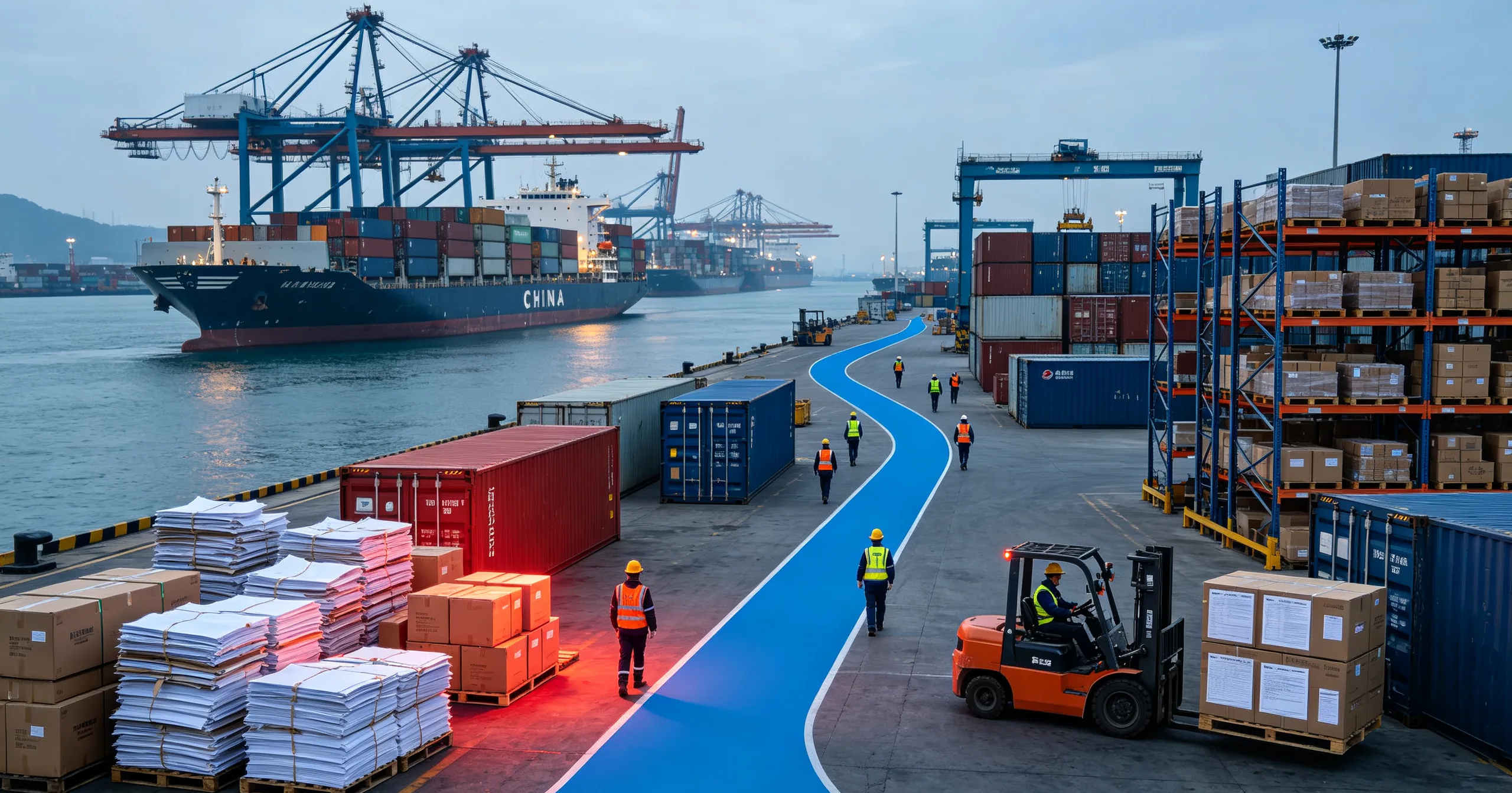
Most shipping delays and hidden costs stem from avoidable forwarder cooperation errors. Correcting these common mistakes stabilizes lead times and reduces cross-border logistics losses.
Why do low-cost forwarder quotes always cause extra losses?
Choosing forwarders solely based on the lowest price is the top cause of over-budget logistics costs. Many budget quotes only cover basic ocean or air freight, excluding standard port charges and surcharges.
Inexperienced sellers compare unit freight prices instead of total landed costs. Forwarders add unstated terminal handling charge (THC), documentation fees, and fuel surcharges after booking. For less than container load (LCL) shipments, hidden consolidation fees often increase final costs by 15% to 25%. Sellers must verify full-package fee lists before confirming cooperation.
What risks come with unclear Incoterms confirmation?
Unconfirmed Incoterms rules lead to misplaced responsibility for customs clearance, tariffs, and accident compensation. Most new sellers cannot distinguish FOB and DDP liability boundaries, triggering repeated charges.
FOB (Free On Board) means sellers only handle domestic China shipment to the port, with overseas clearance and duties borne by buyers. DDP (Delivered Duty Paid) requires forwarders to cover all taxes and door-to-door delivery. Ambiguous term confirmation causes duplicate tariff payments and cargo hold risks during CBP inspections.
How does incorrect product declaration affect shipments?
Wrong HS codes, inconsistent cargo values, and vague product names are the main triggers for customs inspection and forced return. Forwarders rely entirely on seller-provided documents for declaration.
Many sellers use unified general HS codes for mixed goods to save time. This operation does not match official customs standards and will trigger 2O/2P high-risk inspection codes. Inconsistent information between packing lists and commercial invoices will directly detain containers at US and EU ports.
What problems arise from ignoring forwarder qualification verification?
Unlicensed small forwarders lack stable carrier resources and legal liability capabilities, leading to uncontrollable logistics risks. Qualified forwarders must hold valid NVOCC and FMC filing qualifications for US routes.
Unqualified agents often use shared invalid IOR entities for clearance, causing batch cargo detention after policy updates. They also lack standardized accident processing mechanisms. Once cargo is damaged or lost, no formal compensation process can be implemented, resulting in irreversible seller losses.
Why is no cargo insurance a major shipping loophole?
Most sellers ignore cargo insurance and assume forwarders bear full transit risk. Forwarders only provide basic limited liability compensation by default, excluding natural disasters, port congestion, and accidental damage.
High-value Amazon FBA inventory faces huge loss risks without insurance coverage. Port collisions, seawater soaking, and violent handling cannot be completely avoided during long-distance transportation. Purchasing cargo insurance is a necessary risk control step for formal cross-border shipments.
What is the difference between wrong and correct forwarder cooperation habits?
Standardized cooperation processes eliminate over 80% of shipping risks. The following table compares common wrong operations and standardized solutions for sellers’ reference.
|
Common Wrong Operation |
Potential Risk |
Standard Correct Solution |
|
Confirm cooperation by lowest quote only |
Hidden fees surge, total cost over budget |
Request full written fee breakdown before booking |
|
Unclear Incoterms division |
Duplicate tariff and clearance fees |
Confirm FOB/DAP/DDP liability scope in writing |
|
Generalized product declaration |
Customs inspection, cargo detention |
Verify accurate HS code and consistent documents |
|
Skip forwarder qualification check |
Policy risk, no after-sales guarantee |
Check NVOCC, FMC and customs qualification files |
|
No cargo insurance for bulk shipments |
Uncompensated cargo damage and loss |
Match insurance plan based on cargo value |
FAQ
Q1: Is the lowest forwarder quote always unreliable?
A1: Not absolutely, but ultra-low quotes usually exclude mandatory surcharges. Sellers must confirm the full fee composition instead of judging by single freight price.
Q2: Which Incoterm is the safest for Amazon FBA shipments?
A2: Standard DDP terms with clear tax and clearance coverage are the safest, avoiding unknown destination charges and customs risks.
Q3: Will minor declaration information errors cause cargo detention?
A3: Yes. CBP implements strict document matching checks. Any inconsistent name, quantity, or value will trigger targeted inspections and port holds.
Q4: Do low-value goods also need cargo insurance?
A4: Necessary. Low-value bulk goods face high damage rates in LCL consolidation. Low-cost insurance can avoid centralized loss risks.
Q5: What qualifications must a US route forwarder have?
A5: Valid NVOCC license, FMC filing record, and compliant independent IOR qualification to cope with US customs policy audits.
Conclusion
Most cross-border logistics risks come from irregular forwarder cooperation habits rather than carrier failures. Blindly pursuing low prices, ambiguous term confirmation, and non-standard declarations will continuously amplify shipping costs and operational risks.
Stable cross-border shipping requires standardized process management and qualification screening. Easy China Warehouse (ECW) provides transparent fee breakdowns, compliant declaration services, and full-process risk control for FBA and DTC sellers to avoid common forwarding cooperation mistakes.
Contact our team for compliant shipping solutions and cost verification: [email protected]
Follow our blog for updated logistics risk control skills and industry compliance rules.