
If you manage a cross-border e-commerce business selling on Amazon, Walmart, or Shopify, or run a manufacturing company shipping from China to the U.S., you are likely familiar with the complexities of customs clearance. However, a recent updates to the U.S. Customs and Border Protection (CBP) system has introduced a highly specific hurdle that is catching many international shippers off guard: ACE Error Code F865: HTS Not Allowed for Importer.
When an Automated Commercial Environment (ACE) entry summary is submitted and hits this snag, your supply chain grinds to an immediate halt.
Let’s break down exactly what the CBP F865 error means, why it happens, and how cross-border sellers and retailers can resolve it to keep their international freight moving smoothly.
What is the CBP F865 Error Code?
According to the official CBP Cargo Systems Messaging Service (CSMS), the technical breakdown of this electronic filing issue is straightforward but restrictive:
- Condition Code: F865
- Narrative Text: HTS NOT ALLOWED FOR IMPORTER
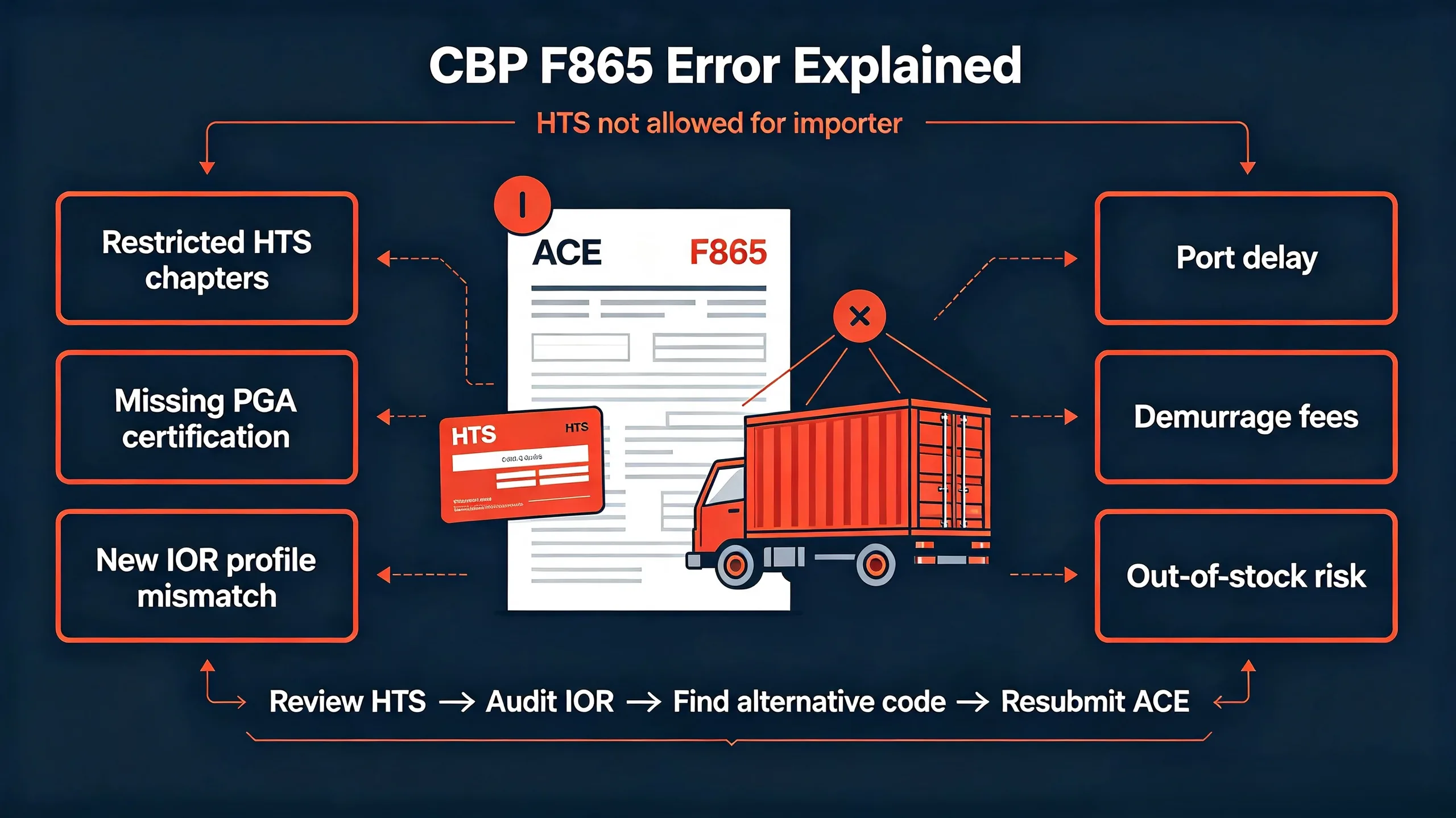
- Explanation: One or more Harmonized Tariff Schedule (HTS) numbers transmitted in the entry summary application are not eligible for the submitted Importer of Record (IOR).
In plain terms, the automated customs platform is rejecting an entry because the business or entity listed as the importer does not have authorization or eligibility to clear goods under that specific 10-digit tariff classification code.
Why are You Seeing the “HTS Not Allowed for Importer” Rejection?
Historically, any licensed Importer of Record could submit a valid HTS code for their goods. However, tighter regulatory oversight has restricted specific commodity classifications to verified businesses or specific trade profiles.
If your logistics provider or customs broker reports an F865 error, it is almost always caused by one of three primary scenarios:
1. Restricted Restrictive Tariff Schedules (Chapter 98 & 99)
This is the most frequent cause of the issue. Certain HTS classifications—specifically special programs under Chapter 98 or temporary trade restrictions/exemptions under Chapter 99 (such as Section 232 or Section 301 exclusions)—require specific certificates, pre-approvals, or specialized business registrations. If a general cross-border e-commerce seller attempts to use a tariff code tied to a highly regulated pharmaceutical, steel, or automotive trade deal without the matching credentials, the ACE system will trigger an F865 rejection.
2. Missing Self-Certifications or Partner Government Agency (PGA) Ties
Certain HTS codes require the Importer of Record to have active profiles or self-certifications tied to agencies like the FDA, EPA, or USDA. If you import specialized consumer goods or electronics that require specific environmental or safety declarations, and your IOR number isn’t registered with that partner agency, the system recognizes a mismatch between your entity type and the item’s classification.
3. Strict Compliance Checks on New Importer of Record Numbers
CBP is continuously training its automated systems to catch fraudulent or shell-company accounts trying to bypass strict trade policies. If you have a newly established U.S. entity or a foreign Importer of Record bond, and you are suddenly attempting to import complex, high-tariff commodities, the system may flag the shipment for lack of matching historical trade data or missing trade program registration.
The Impact on Cross-Border Sellers and Retailers
For global e-commerce companies utilizing supply chain strategies like Amazon FBA, or retailers fulfilling time-sensitive product drops, the F865 error code can be highly disruptive:
- Delays at the Port of Entry: Because the error results in an immediate customs entry summary rejection, your container or air freight shipment cannot be released until a corrected file is pushed through.
- Demurrage and Storage Fees: If your shipment sits at a U.S. port of entry or terminal warehouse while your customs broker attempts to figure out the filing issue, expensive daily storage fees will rapidly accumulate.
- Out-of-Stock Penalties: Supply chain delays cause missed delivery windows, directly lowering your seller metrics on platforms like Amazon and Walmart, and damaging conversion rates on independent Shopify sites.
How to Fix and Prevent the F865 Error: A Step-by-Step Guide
If your shipment is currently held up by this specific error code, don’t panic. You can work with your supply chain partners to implement a clear resolution pathway.
1.Review the Entry Summary and HTS Line Items:Immediate Action Required。
Have your customs broker pulled the exact transmission log. Isolate the specific 10-digit HTS code that triggered the F865 code. Verify if it falls under restrictive chapters like Chapter 98 or 99, or if it carries active trade remedy exemptions.
2.Audit the Importer of Record (IOR) Credentials:Within 24 Hours。
Check the legal status of your U.S. or foreign IOR number. Ensure that your customs bond is entirely active and that your entity has filed any necessary self-certifications or partner government agency registrations required for that specific class of goods.
3.Determine Alternative Classifications or Secure Approvals:Consultation Phase。
If the HTS code is strictly limited to authorized manufacturers or specific trade program participants that you do not qualify for, consult a logistics specialist to find a more accurate, general classification code for your finished e-commerce products.
4.Re-submit the Corrected Electronic Entry via ACE:Final Resolution。
Once the HTS code is updated or the required importer profile data is properly attached, have your customs broker re-transmit the corrected entry summary data to CBP for immediate automated review and cargo release.
Safeguard Your Supply Chain with Proactive Logistics
Navigating U.S. Customs updates in 2026 demands a proactive approach to your international supply chain. The best way to avoid an unexpected “HTS Not Allowed for Importer” error is to partner with an experienced global logistics partner before your cargo leaves the factory in China.
Ensuring your supplier’s commercial invoices match U.S. HTS standards and continuously auditing your Importer of Record profile will keep your shipments moving smoothly. Taking these compliance steps guarantees your products transition seamlessly from international ocean or air freight directly onto Amazon, Walmart, and retail shelves without costly regulatory delays.