
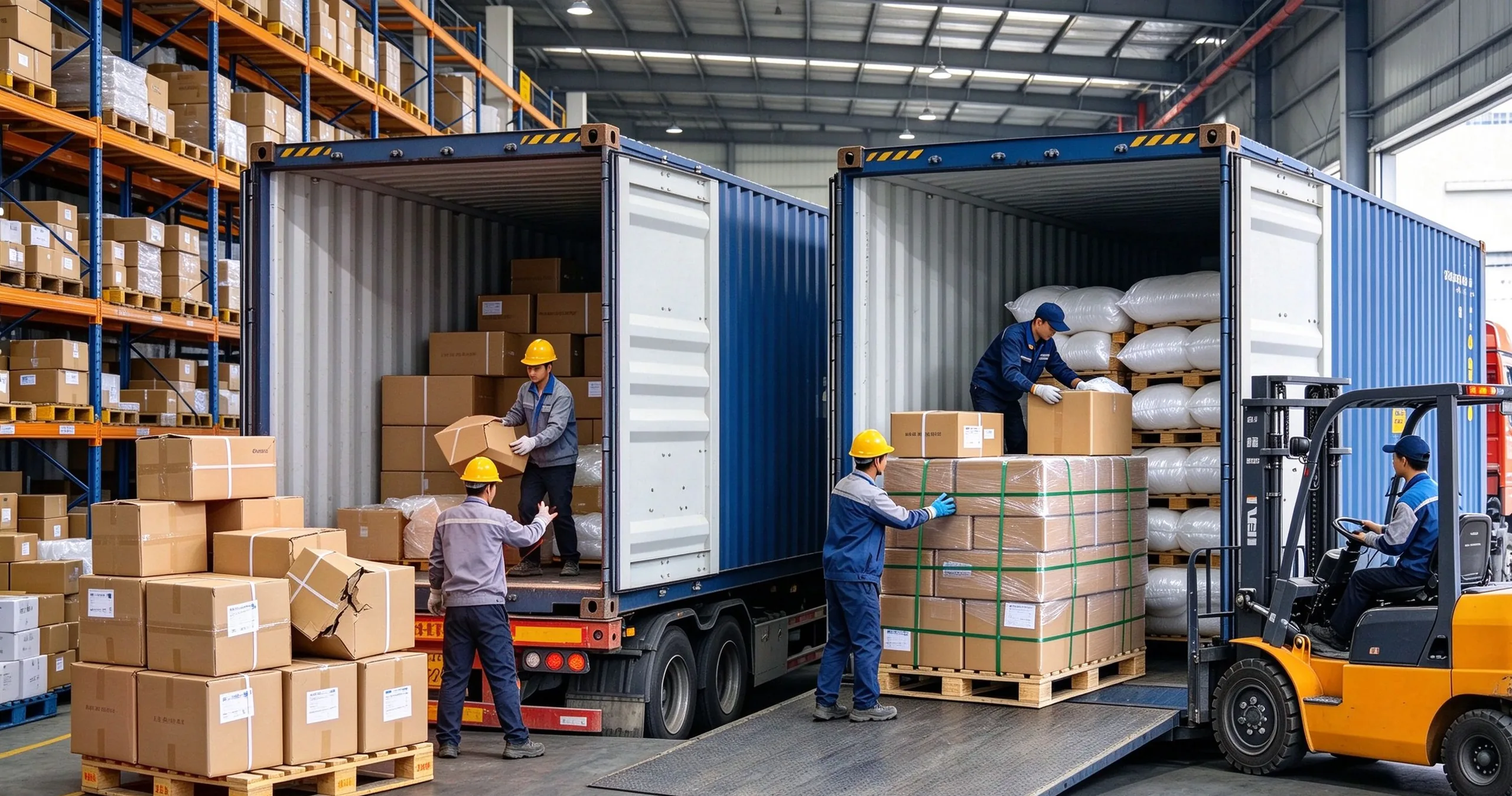
Cargo damage mainly comes from poor packaging, loose container loading and rough handling. Standardized packing, pallet securing and container bracing can cut damage rates to below 2% for China outbound shipments.
What is the primary cause of cargo damage in China freight forwarding?
Most damage occurs from shifting goods, insufficient cushioning and overstacking during multiple handoffs. Goods move through warehouses, port terminals and inland trucks, with repeated vibration and impact across the whole forwarding chain.
Less than container load (LCL), consolidated cargo that shares container space with other shipments, sees higher damage risk than full container load (FCL), a shipment occupying one whole container. LCL goods face more frequent sorting and reloading. Without fixed inner support, cartons slide and collide inside containers. Moisture from sea transit also weakens cardboard boxes and leads to crushing. Amazon FBA inventory often suffers broken cartons when packages lack edge protection. Every breakage leads to Amazon receiving rejection and extra rework fees.
How to improve inner packaging to avoid product breakage?
You must eliminate all internal movement inside each carton to stop impact damage. Every item needs individual protection before outer box packingDHL.
Wrap fragile items with bubble wrap or foam sheets, and fill empty gaps with air pillows or kraft paper. No goods should shift when you shake the sealed carton. Use double-wall or triple-wall corrugated cartons instead of single-wall boxes for international forwarding. Seal all seams with the H-taping method: one tape strip down the center, plus two strips across top and bottom edges. Add plastic moisture barriers and desiccants for sea freight to stop condensation, also called container rain, from soaking cartons. Mark fragile goods with internationally recognised handling labels, including Fragile and Do Not Stack.
What pallet and container loading rules reduce crushing damage?
Unstable pallet stacking and unfixed container loads account for more than half of all freight damage cases, according to DHL forwarding data published in July 2026DHL.
Build flat, evenly weighted pallets. Keep heavy cartons at the bottom and light fragile items on top. Wrap the whole pallet with stretch film with 50% overlap between layers, then fasten cargo with tension straps. All wooden pallets must carry ISPM 15 heat-treatment stamps for cross-border shipping. Inside containers, fill void space with air bags and timber bracing to block lateral sliding. Never place heavy metal cargo next to fragile goods. Distribute weight evenly across the container floor to avoid local pressure crushing bottom-layer cartons.
How to choose shipping modes and carriers to lower damage risk?
Consolidated LCL shipments carry higher damage risk than direct FCL or rail FCL. You can adjust transport modes based on cargo type and value.
For fragile ecommerce inventory headed to Amazon FBA, book FCL direct shipments instead of multi-stop consolidation. Select forwarders with fixed warehouse handling standards and documented loading procedures. Avoid carriers with frequent terminal transshipment. Take photos and short videos of packed pallets before pickup. Keep this visual evidence for damage claims. Purchase all-risk cargo insurance to cover financial loss if breakage still happens.
Damage prevention checklist for China freight forwarding
|
Risk Type |
Prevention Measure |
Inspection Item |
|
Internal product impact |
Individual wrapping + gap filling |
No movement when shaking cartons |
|
Carton crushing |
Double-wall cartons + H-taping |
Box strength matches total weight |
|
Moisture damage |
Waterproof film + desiccants |
Sealed carton seams for sea freight |
|
Pallet collapse |
Even stacking + stretch wrap + tension straps |
Flat pallet surface without overhang |
|
Container sliding |
Air bags + timber bracing |
Zero lateral movement inside the container |
Frequently Asked Questions
Q1: Why do LCL shipments have higher damage rates than FCL?
A1: LCL cargo goes through multiple sorting and reloading steps at consolidation warehouses. Goods shift freely inside shared containers without fixed bracing. FCL loads stay sealed from pickup to destination with fewer handoffs.
Q2: What labeling should I print on fragile cartons?
A2: Print Fragile, Do Not Stack, This Side Up and Lift Here marks. Add shock indicator stickers to record rough handling during transit.
Q3: Can moisture inside sea containers damage dry goods?
A3: Yes. Temperature changes create container rain. Use desiccants and sealed plastic inner bags to stop water from soaking cartons and ruining inventory.
Q4: What evidence do I need to file a damage claim?
A4: Keep pre-shipment photos, pallet loading videos, delivery receipts and inspection reports. File claims within 7 days after receiving damaged cargo.
Q5: Does cargo insurance cover all breakage losses?
A5: Insurance covers accidental transit damage. It does not compensate losses caused by poor packaging or improper loading.
Conclusion
Cargo damage in China freight forwarding stems mainly from weak packaging, unstable pallet stacking and unfixed container loads. You can control most risks with reinforced inner packing, properly secured pallets and braced container loading. Document cargo condition before handover and take out all-risk insurance to limit financial losses.
Easy China Warehouse (ECW) provides pallet consolidation, container loading supervision and pre-shipment inspection for Amazon FBA and DTC ecommerce sellers. Our team follows international packaging standards to reduce breakage during outbound forwarding.