Login

How Walmart Sellers Master Shipments from China to Saudi Arabia Walmart Warehouse (WFS)
November 28, 2025
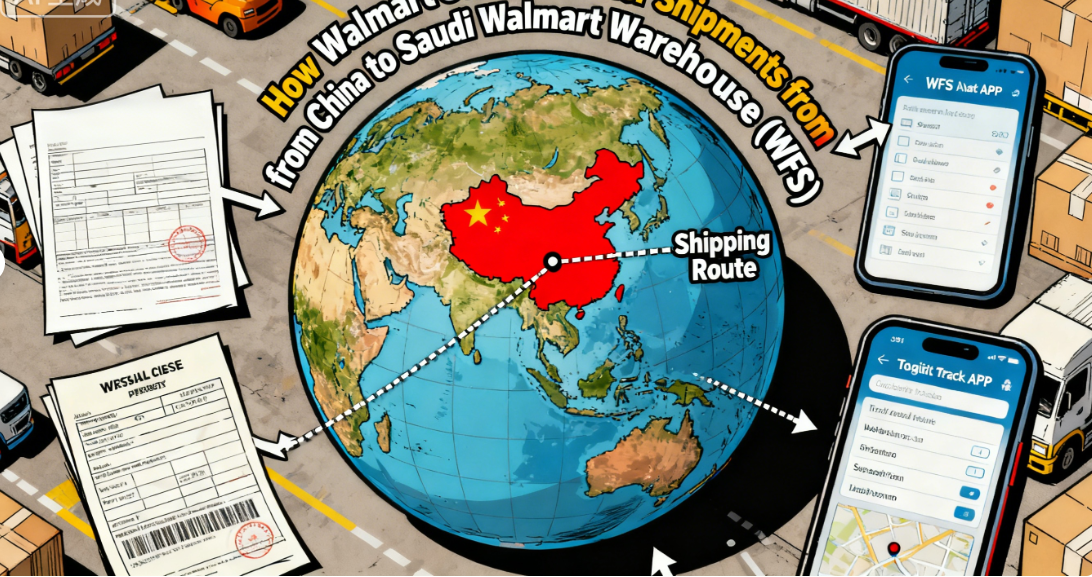
As a cross-border e-commerce seller on platforms like Walmart, Amazon, or Shopify, you’ve unlocked a world of opportunity. Sourcing products directly from China’s manufacturing hubs gives you a competitive edge. But the critical link in your supply chain—getting those goods from a factory in Shenzhen to a Walmart Fulfillment Services (WFS) warehouse in Saudi Arabia—can feel like a daunting logistics puzzle.
Mastering this process is key to scaling your business in the booming Saudi market. This guide will walk you through the essential steps and strategies for managing your shipments from China to Walmart Saudi Arabia seamlessly.
Understanding Walmart Fulfillment Services (WFS) in Saudi Arabia
Walmart Fulfillment Services (WFS) offers a robust solution for sellers to store their products in Walmart’s fulfillment centers, allowing Walmart to handle storage, picking, packing, and shipping to customers. For Walmart sellers eyeing the Saudi Arabian market, leveraging WFS can significantly enhance customer satisfaction through faster delivery times and simplified logistics. However, getting your products from your China suppliers to a WFS warehouse in Saudi Arabia requires careful planning and execution.
The Journey: Shipping from China to Saudi Arabia WFS
Navigating international shipping can be complex, but breaking it down into manageable steps makes Here’s a breakdown of the journey your products will take:
Step 1: Sourcing and Consolidation in China
Your journey begins at the source. Whether you’re working with multiple suppliers in Yiwu, Guangzhou, or Shenzhen, the first step is often goods consolidation. Instead of dealing with multiple, small, expensive shipments, a reliable partner in China can collect your products from various factories, perform a quality inspection, and repack them into a single, shipper-ready shipment. This saves significantly on freight costs and simplifies tracking.
Step 2: Choosing the Right International Shipping Method
This is the core of your logistics decision. You have two primary options for shipping from China to Saudi Arabia:
- Air Freight: Best for low-volume, high-value, or time-sensitive products. It’s faster (5-10 days) but more expensive. Ideal for restocking best-sellers quickly to avoid stockouts.
- Sea Freight: The most cost-effective choice for high-volume, low-cost goods. While transit times are longer (20-35 days), the savings on bulk shipments are substantial. This is the go-to method for initial inventory builds or large, heavy items.
A crucial note for e-commerce sellers: Sea-Air Freight is a hybrid solution growing in popularity. Goods travel by sea to a hub like Dubai and then by air to Saudi Arabia. It strikes a balance between cost and speed, often cheaper than pure air freight and faster than pure sea freight.
Step 3: Mastering Customs Clearance
Customs clearance is non-negotiable. Saudi Arabia has specific import regulations and documentation requirements. Your shipment will require:
- Commercial Invoice
- Packing List
- Certificate of Origin
- Bill of Lading (Sea) or Air Waybill (Air)
Failure to provide accurate paperwork can lead to lengthy delays and storage fees. Most sellers partner with a freight forwarder or a China-based logistics company that has expertise in Saudi Arabian import laws and can handle customs brokerage on both ends (China export and Saudi Arabia import).
Step 4: Land Transportation and Final Delivery to WFS
Once your shipment clears customs at a Saudi port (e.g., Jeddah Islamic Port) or airport (e.g., King Abdulaziz International Airport), it needs to be transported to the specific Walmart fulfillment center in Saudi Arabia. This last-mile delivery in Saudi Arabia is typically handled by a local trucking partner arranged by your freight forwarder.
Critical Pre-Delivery Step: Ensure your cartons are perfectly aligned with WFS requirements. This includes:
Palletization Requirements: If shipping via pallet, ensure they are built to Walmart’s specifications.
Walmart FNSKU Labels: Every unit must have the correct barcode label.
Carton ID Labels: Each shipping carton needs its own unique label.
Overcoming Common Logistics Challenges
E-commerce logistics challenges can arise at any stage. Here’s how to mitigate them:
- Customs Delays: Inaccurate documentation, missing certificates, or misdeclared goods can lead to significant hold-ups. Work with an experienced China freight forwarder who understands Saudi Arabian regulations.
- High Shipping Costs: Optimize your shipping strategy by balancing speed and cost. Consider freight consolidation if you have multiple suppliers or smaller shipments.
- Quality Issues: Implement strict quality control at your supplier’s factory or through a third-party inspection service in China.
- Inventory Management: Plan your shipments well in advance to avoid stockouts or excessive storage fees. A China warehouse can offer temporary storage and help with phased shipments.
Why Partnering with a Specialist is a Game-Changer
While it’s possible to coordinate this process yourself, the complexity of international shipping from China, coupled with WFS’s specific rules, makes a specialized partner invaluable. An expert China logistics partner like EasyChina Warehouse acts as your single point of contact, managing:
- End-to-End Supply Chain Management: From warehouse consolidation in China to final delivery at WFS.
- Expert Customs Clearance: Navigating the complexities of Saudi import duties and regulations.
- WFS Compliance: Ensuring all labeling and packaging is 100% correct before shipment leaves China, preventing costly rejections.
- Cost Optimization: Helping you choose the most efficient shipping method (air, sea, or express) for your budget and timeline.
This allows you, the seller, to focus on what you do best: marketing, sales, and growing your cross-border e-commerce business.
Conclusion: Streamline for Success
Successfully managing shipments from China to Walmart Saudi Arabia is a systematic process that hinges on careful planning, understanding the logistics options, and ensuring strict compliance. By building a reliable supply chain—whether through a trusted partner or by mastering the details yourself—you can ensure your products are always available for Saudi customers, driving your growth on one of the world’s most dynamic e-commerce platforms.
Ready to simplify your China-to-Saudi WFS shipping? Contact EasyChina Warehouse today for a seamless, stress-free logistics experience that lets you focus on scaling your business.