Login

International Logistics Billing Guide: A Step-by-Step Tutorial to Accurately Calculate Shipping Costs and Avoid Pitfalls
March 31, 2026
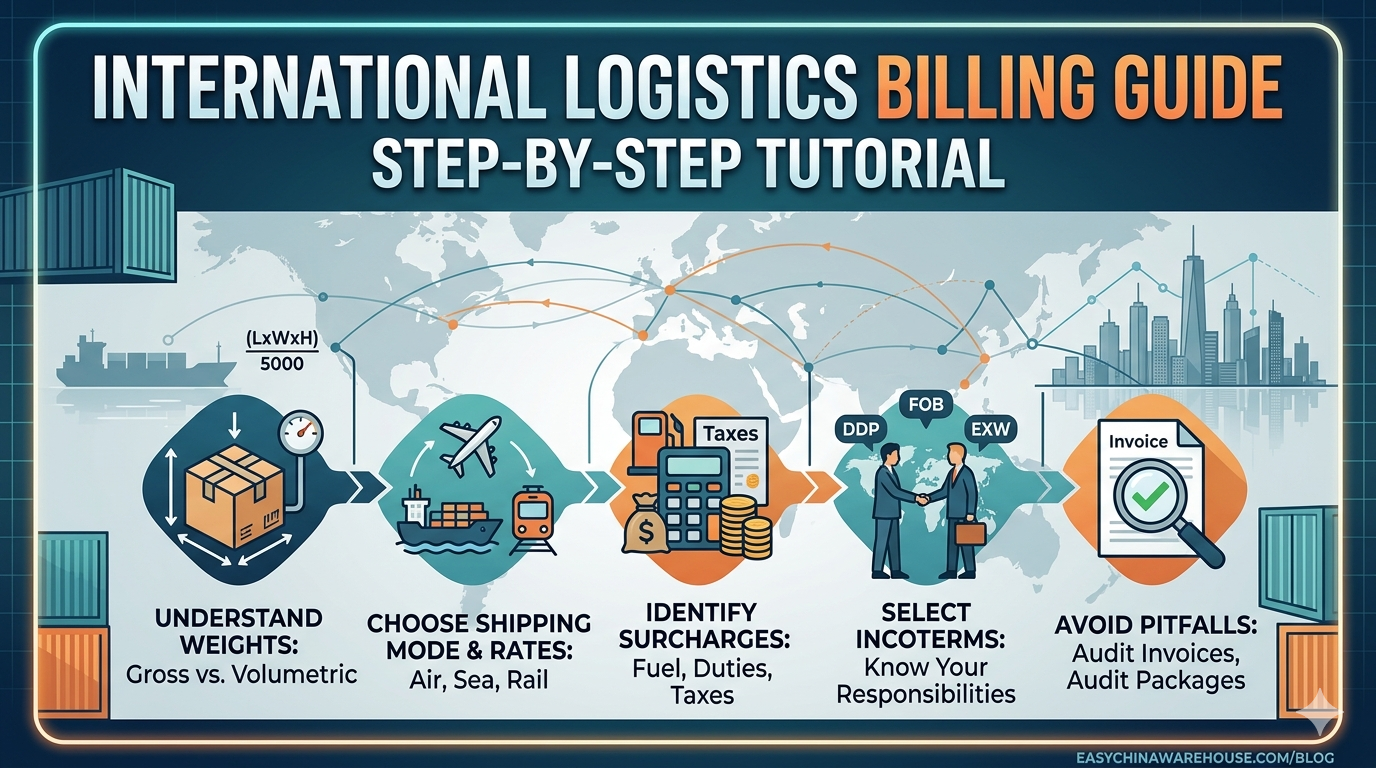
For cross-border e-commerce sellers on platforms like Amazon, Walmart, and Shopify, or manufacturing companies moving bulk inventory, understanding international logistics billing is the difference between a healthy profit margin and an unexpected loss. Shipping from China to global markets involves more than just a simple weight-based fee; it involves complex calculations, surcharges, and hidden variables.This guide provides a step-by-step tutorial to help you master international shipping rates, calculate costs accurately, and avoid the common pitfalls of global trade.
Step 1: Understand the Difference Between Gross Weight and Volumetric Weight
The most common mistake in international logistics is budgeting based solely on how much a box weighs on a scale. Carriers use a “Chargeable Weight” system, which is the higher of the two following values:
Gross Weight: The actual weight of the cargo including packaging and pallets.
Volumetric (Dimensional) Weight: A calculation based on the amount of space the package occupies.
The Formula: For air freight and express couriers (DHL, FedEx, UPS), the standard formula is:
(Length x Width x Height in cm) / 5000 = Volumetric Weight in kg
If you are shipping lightweight but bulky items—like pillows or plastic toys—your volumetric weight will likely exceed your gross weight, increasing your costs significantly.
Step 2: Identify Your Shipping Mode and Base Rates
Your billing structure changes depending on the mode of transport. When sourcing from China, you generally choose between:
Express/Air Freight: Best for high-value, low-volume goods. Billing is usually per kilogram. Note that “Express” often includes door-to-door service, while “Air Freight” might only cover airport-to-airport.
Sea Freight (LCL vs. FCL):
LCL (Less than Container Load): Billed per CBM (Cubic Meter). It is ideal for smaller shipments that don’t fill a whole container.
FCL (Full Container Load): Billed at a flat rate per container (20GP, 40GP, or 40HQ).
Rail Freight: A middle-ground option for shipments to Europe, often billed by weight or volume depending on the consolidator.
Step 3: Account for Surcharges and “Hidden” Fees
The base freight rate is rarely the final price. To avoid “bill shock,” you must factor in common surcharges:
Fuel Surcharge: A percentage-based fee that fluctuates with global oil prices.
Remote Area Surcharge: Applied if the delivery destination is far from the carrier’s main hubs.
Address Correction Fees: Common with Shopify or Amazon sellers when customer data is entered incorrectly.
Residential Delivery Fees: Most couriers charge extra for delivering to a home rather than a commercial warehouse.
Duty and Taxes: Depending on your Incoterms (e.g., DDP vs. DAP), you may be responsible for import duties and VAT.
Step 4: Choose the Right Incoterms
Incoterms (International Commercial Terms) define who is responsible for the cost and risk at every stage of the journey. For e-commerce sellers, the two most common are:
EXW (Ex Works): The buyer pays for everything from the factory door in China to the final destination.
FOB (Free On Board): The Chinese supplier covers the cost to get the goods onto the ship; the buyer pays for the ocean freight and destination charges.
DDP (Delivered Duty Paid): The most “hands-off” option for retailers. The forwarder handles everything, including customs and taxes, providing a single “all-in” price.
Step 5: How to Avoid Common Billing Pitfalls
Verify the DIM Factor: Different forwarders may use different divisors (e.g., 6000 instead of 5000) for volumetric weight. Always confirm this before booking.
Consolidate Small Shipments: If you are buying from multiple suppliers in China, use a warehouse consolidation service. Paying for one large shipment is significantly cheaper than paying the “minimum weight” fees on five small ones.
Audit Your Invoices: Check your final invoice against your initial quote. Look for discrepancies in weight or unexpected “handling fees” that weren’t disclosed.
Optimize Packaging: Minimize “dead air” in your boxes. Reducing the box size by just a few centimeters can drop your chargeable weight into a lower bracket.
Conclusion: Mastering Your Supply Chain Costs
Accurate logistics billing is the backbone of a successful international retail or manufacturing business. By understanding how chargeable weight is calculated and being aware of potential surcharges, you can request more accurate quotes from your freight forwarders and protect your bottom line.