Login

Ocean Freight Rates Volatility: How to Secure Capacity and Manage Costs
December 9, 2025
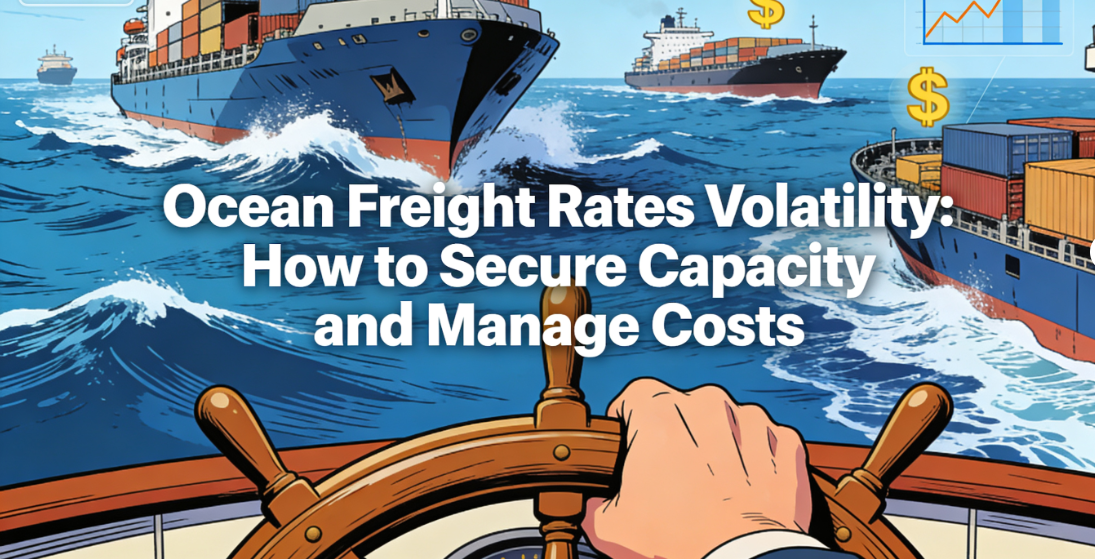
For businesses shipping goods from China—whether you’re a growing Amazon FBA seller, a manufacturer expanding globally, or a retailer stocking your Shopify store—ocean freight is the backbone of your supply chain. Yet, if the past few years have taught us anything, it’s that ocean shipping rates can be a rollercoaster. From record-high peaks to sudden dips, this volatility can disrupt budgets and threaten your ability to secure container space.Understanding how to navigate this uncertainty is no longer optional; it’s a critical business skill. This guide will walk you through the causes of freight rate fluctuations and provide actionable strategies to secure shipping capacity and manage logistics costs effectively.
Why Are Ocean Freight Rates So Unpredictable?
Several key factors combine to create the perfect storm for volatile shipping markets:
- Supply and Demand Imbalance: This is the core driver. A sudden surge in consumer demand (as seen post-pandemic) clashed with a shortage of shipping containers and port congestion, causing rates to skyrocket. When demand slows, rates can fall just as quickly.
- Global Port Congestion: When major ports like Shanghai, Los Angeles, or Rotterdam experience delays, ships get stuck in queues. This reduces the effective global container shipping capacity available, tightening the market.
- Geopolitical and Economic Factors: Trade policies, sanctions, and regional conflicts can instantly reroute trade lanes and impact capacity. Similarly, broader economic conditions directly affect import/export volumes.
- Seasonal Peaks: Events like Chinese New Year, Golden Week, and the pre-holiday rush (Q3/Q4) create annual spikes in demand for China to USA shipping and other major routes, pushing rates higher.
How to Secure Container Shipping Capacity in a Tight Market
When space is tight, being proactive and flexible is key. Here’s how to ensure your goods get on the ship:
- Build Strong Partnerships: Don’t just transact; build relationships with your freight forwarder China-based partners or directly with carriers. Long-term partnerships can provide priority access and better insights into the market than simply shopping for the lowest spot rate.
- Diversify Your Ports and Routes: Relying solely on Shanghai to Los Angeles? Consider alternative China export shipping routes. Ports like Ningbo, Qingdao, or Shenzhen might offer better options. Investigate different discharge ports in your destination country to avoid the most congested hubs.
- Book Early and Be Flexible: The earlier you can forecast and book your sea freight space, the better. Provide your logistics partner with accurate volume forecasts. Be flexible with your shipping schedule—sometimes a departure a few days later can mean a significantly lower rate.
- Consider Contract vs. Spot Rates: For stable, predictable volumes, a longer-term ocean freight contract can lock in capacity and provide cost stability. Use the more volatile spot rates for overflow or unexpected shipments. A blended strategy often works best.
Smart Strategies to Manage and Control Your Shipping Costs
Securing space is one thing; doing it cost-effectively is another. Implement these practices to protect your bottom line:
- Optimize Your Packaging and Consolidation: This is one of the most direct levers you control. Work with your China warehouse or supplier to design packaging that maximizes container space. Use LCL shipping (Less than Container Load) services to consolidate smaller shipments, which is often more economical for SMEs than FCL shipping (Full Container Load).
- Leverage Data and Technology: Use freight management platforms or work with a forwarder that provides transparent data. Track freight rate trends on key lanes (e.g., Asia to US freight rates) to identify the best booking windows. Knowledge truly is power.
- Factor in the Total Cost: The cheapest rate isn’t always the best. Consider the total cost of international shipping, including inland transportation, terminal fees, and potential demurrage/detention charges. A reliable service that avoids delays can save more money in the long run.
- Master Your Documentation: Inaccurate or incomplete customs clearance documents can lead to costly delays and storage fees at the destination port. Ensure your commercial invoice, packing list, and other export documentation are flawless.
Your Partner in a Complex Sea
At Easy China Warehouse, we understand the challenges of international shipping from China. We’re more than just a freight forwarder; we are your integrated logistics partner. From utilizing our China sourcing warehouse for consolidation and quality control to providing competitive and stable freight quotes, we help you build a resilient and cost-effective supply chain.
By combining strategic planning, strong partnerships, and operational efficiency, you can transform ocean freight volatility from a constant threat into a manageable variable. Let us help you navigate the waves and sail smoothly toward global market success.Ready to build a more predictable shipping strategy? Contact our team today for a consultation and a transparent quote tailored to your specific cross-border e-commerce or business needs.