
If you are a cross-border e-commerce seller on Amazon, Walmart, or Shopify, or a manufacturing company relying on just-in-time supply chains, it is time to reassess your shipping strategy.
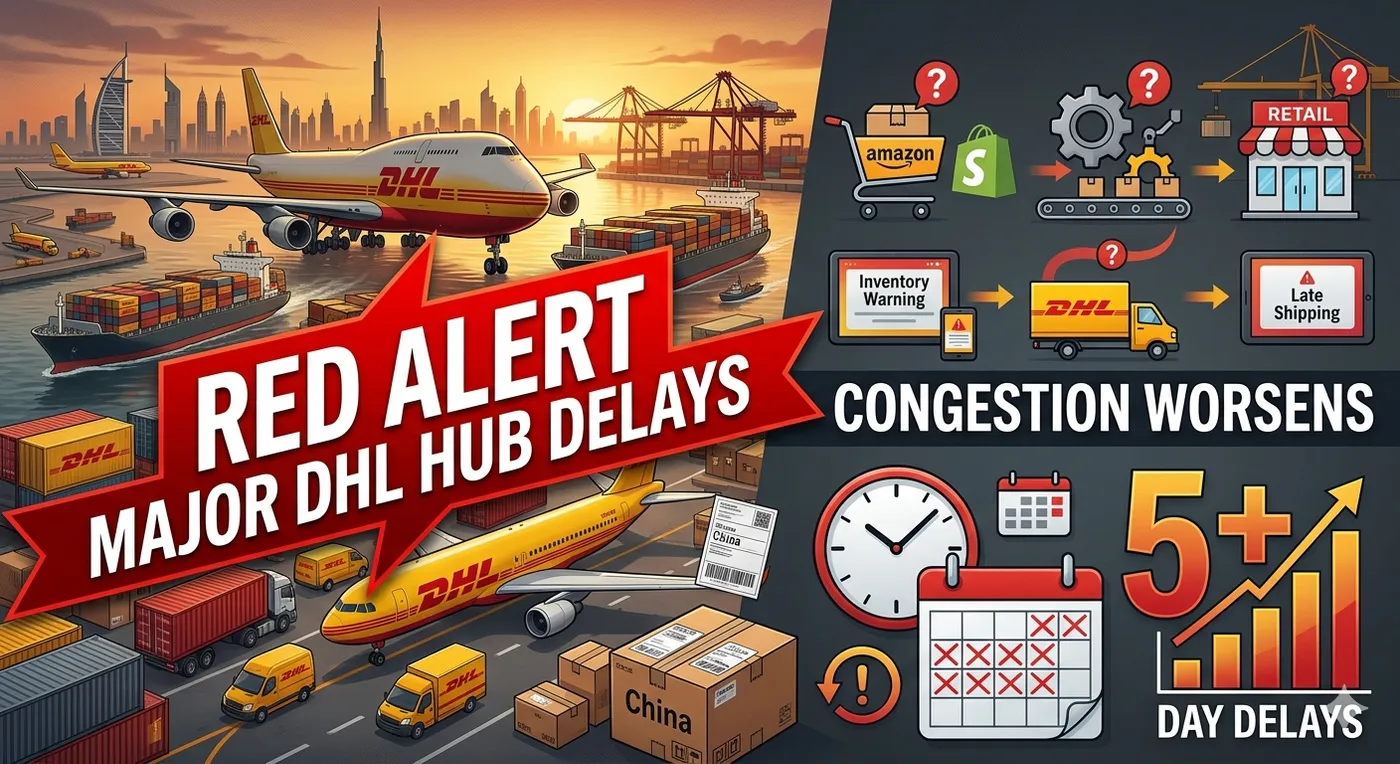
DHL has officially issued a “Red Alert” warning for international shipments passing through or destined for major Middle East transit hubs. Due to a sudden surge in volume, geopolitical shifts, and compounding regional bottlenecks, global logistics providers are flagging delays of 5+ days, with shipping congestion expected to worsen in the coming weeks.
For businesses engaged in cross-border trade, particularly those sourcing products from China, this disruption could trigger a domino effect of stockouts, delayed customer orders, and skyrocketing operational costs. Here is everything you need to know about the current crisis and how to protect your supply chain.
What is Causing the DHL Middle East Shipping Delays?
The logistics ecosystem in the Middle East is facing a perfect storm. A combination of ocean freight diversions (with more ships avoiding the Red Sea and opting for overland or air-transit alternatives) and a massive spike in global e-commerce demand has pushed regional hubs past their maximum capacity.
Key transshipment hubs are experiencing unprecedented bottlenecks. Because these locations act as critical gateways connecting China’s manufacturing powerhouses to Europe, Africa, and parts of the West, a backup here halts the entire global flow of goods. DHL and other major express couriers are struggling with severe backlogs, resulting in the 5+ day delay notification for standard and even express shipping lanes.
The Cost of Delay: Impact on E-Commerce Sellers and Manufacturers
When international logistics slow down, businesses bear the financial brunt. If your business relies heavily on smooth China to Middle East shipping routes or uses these hubs for global distribution, the impacts are multi-fold:
- Amazon Account Health & Marketplace Penalties: For Amazon FBA/FBM sellers, Walmart vendors, and Shopify store owners, delayed inventory means missing your delivery windows. This can lead to lost “Buy Boxes,” plummeting search rankings, and poor customer reviews.
- Disrupted Manufacturing Timelines: For factories and manufacturing enterprises waiting on raw materials or components, a 5-day delay can completely stall production lines, resulting in expensive downtime.
- Increased Freight Rates: As capacity tightens and congestion worsens, air freight and express courier rates traditionally spike. Securing space on alternative routes will become increasingly competitive and costly.
How to Safeguard Your Supply Chain: Strategic Solutions
Waiting out the congestion is not a viable option for fast-moving brands. To mitigate the impact of the DHL Red Alert, cross-border e-commerce sellers and retailers should implement the following logistics workarounds immediately:
1. Diversify Your Shipping Methods
If you rely exclusively on express air couriers like DHL, it is time to look at alternative freight forwarding services. Depending on your timeline and budget, switching to dedicated air freight, fast sea freight, or multimodal rail-sea solutions can help bypass the heavily congested Middle East hubs entirely.
2. Optimize Your China Warehousing Strategy
Instead of rushing production and shipping in small, frantic batches, consider utilizing a centralized China warehouse. By consolidating your inventory closer to the manufacturing source, you can hold safety stock in China and strategically dispatch larger volumes via unaffected shipping lanes the moment space opens up. This minimizes your vulnerability to sudden regional hub closures.
3. Factor in Extended Lead Times
Proactively update your inventory forecasting models. Add at least 7 to 10 days of buffer time to all international shipments originating from China. Let your suppliers know ahead of time so production schedules can be adjusted accordingly.
4. Communicate Transparently with Customers
If you run a Shopify store or fulfillment operation directly impacted by these delays, update your shipping policy pages and transactional emails. Customers are generally understanding of global logistics crises if they are informed before their package is late.
Partner with an Expert China Freight Forwarder
Navigating global supply chain disruptions requires agility, local expertise, and access to diverse shipping networks. When major express networks like DHL flag delays, having a reliable logistics partner on the ground in China makes all the difference.
At Easy China Warehouse, we help cross-border e-commerce sellers, retailers, and manufacturing companies streamline their supply chains. From secure warehousing and inventory consolidation in China to identifying the fastest, most cost-effective alternative shipping routes, we ensure your goods bypass global bottlenecks and reach their destination on time.
Don’t let regional congestion halt your business growth. Contact Easy China Warehouse today to optimize your shipping strategy and keep your supply chain moving forward.