
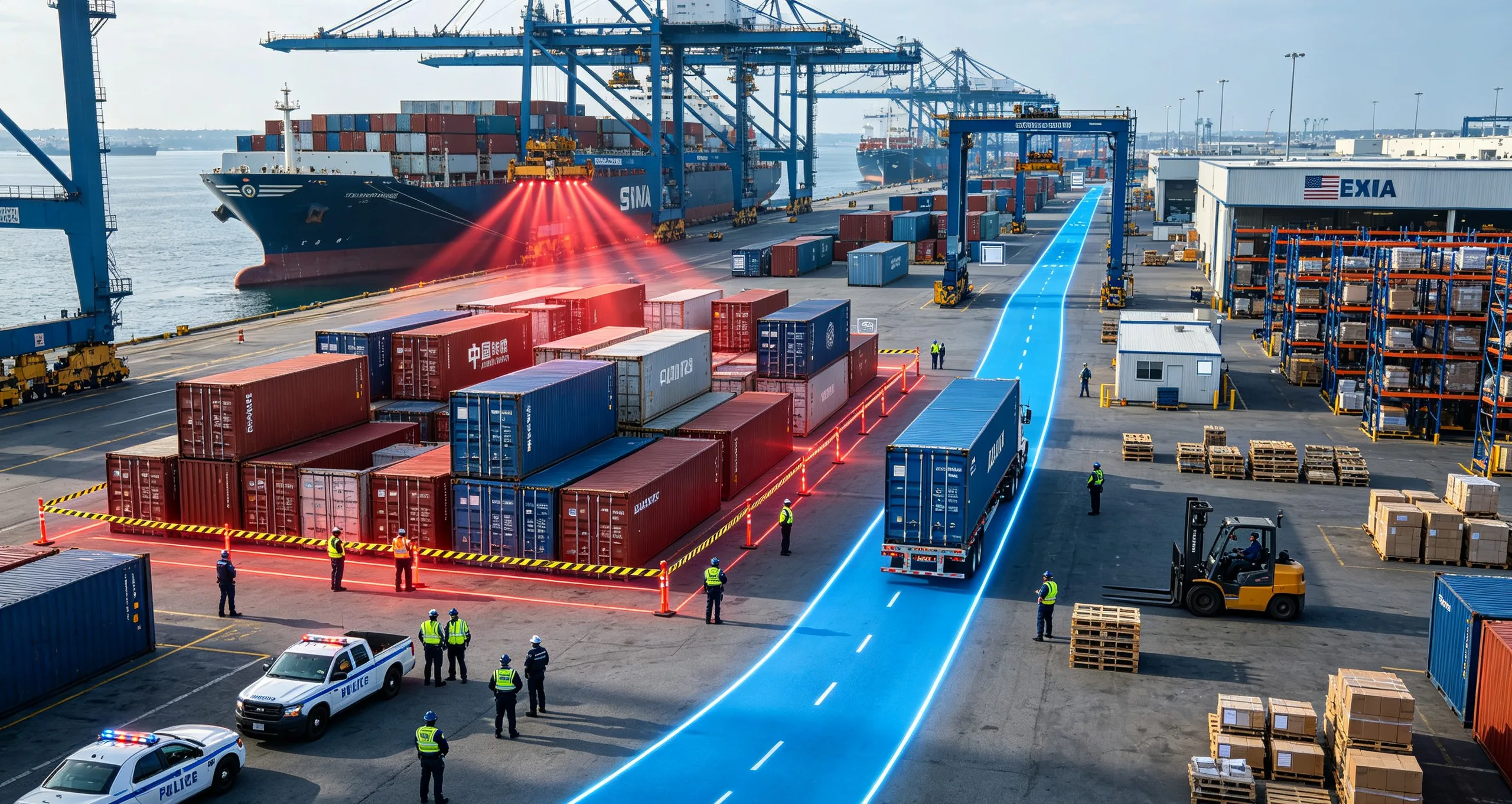
Massive US port detentions of China-origin containers are pre-enforcement action for the September 18 IOR rule. Shared and fake IOR entities now trigger full port holds and forced returns for US-bound shipments.
What is causing mass container detention at US ports in early September 2026?
Recent port seizures are targeted compliance audits by U.S. Customs and Border Protection (CBP), not random spot checks. Since early September 2026, around 3,000 Chinese containers have been detained, with many triggering 2O/2P inspection codes that force mandatory vessel returns. Direct shipper BCO containers account for most affected cargo, and individual forwarders have suffered over 100 returned containers in a single batch.
To clarify key logistics terms for cross-border sellers: CBP (U.S. Customs and Border Protection) is the official agency responsible for U.S. import inspection, detention, and return enforcement. BCO (Beneficial Cargo Owner) refers to direct shipper containers booked by cargo owners without third-party forwarder transit. The 2O/2P code is a high-priority customs inspection marker that drastically increases the risk of container detention and forced return.
What is the September 18 IOR rule update from CBP?
The incoming policy is a formal upgrade of U.S. import compliance, officially published in the Federal Register and scheduled for full enforcement on September 18, 2026 (CBP, August 2026). IOR (Importer of Record) refers to the legally registered U.S. import entity that bears full legal responsibility for cross-border shipments.
Low-cost US shipping channels have long relied on shared or borrowed IOR models, where one single IOR entity serves dozens of sellers to cut clearance costs. The new rule eliminates this gray operation model. It requires all IORs to hold valid local U.S. qualifications, verifiable business addresses, and complete tax records. Fake or duplicated IOR registrations will lead to batch detention and return of all cargo under the invalid entity.
How does the new IOR rule impact cross-border sellers?
The updated regulation fundamentally reshapes low-cost US shipping logistics, bringing three core operational risks for e-commerce sellers.
First, low-tax and duty-free shipping channels will be restructured. Most budget US routes depend on non-compliant shared IORs. After September 18, these channels will face shutdowns or drastic freight increases, ending the era of cutthroat low-price competition.
Second, joint liability detention risks rise sharply. If an IOR is marked abnormal by CBP, all in-transit and port-stored cargo under that entity will undergo batch inspections, not just individual containers. One invalid IOR can cause massive losses for multiple sellers.
Third, logistics costs surge and timelines become unstable. Detention fees, port storage charges, and return shipping fees accumulate rapidly during port holds. Extended inspection cycles disrupt inventory schedules and cause stockouts for Amazon FBA and DTC store listings.
What practical solutions can sellers adopt to avoid IOR-related risks?
Sellers must shift from price-focused selection to compliance-focused logistics management, with four actionable adjustments.
Verify your IOR qualifications first. Confirm with forwarders that your IOR is an independent, legally registered U.S. entity with verifiable local addresses and tax records, and reject all shared or affiliated IOR resources.
Optimize shipping channel selection. Stop comparing only freight rates; evaluate clearance solutions, IOR independence, and historical inspection records. Distinguish risks between duty-paid and self-declaration shipping terms to avoid hidden compliance hazards.
Adjust inventory scheduling. Reserve sufficient logistics buffer time for all US-bound shipments. Avoid shipping with zero inventory margins to prevent store stockouts caused by unexpected port detention.
Standardize declaration documents. Declare cargo values and product names truthfully, and prepare complete product compliance certificates. Inconsistent documentation is the primary trigger for 2O/2P high-risk inspections.
What is the long-term trend for US-bound China shipping?
US cross-border logistics is permanently shifting from low-price gray operations to standardized compliance. The September port mass detention is only a pre-enforcement warning of the official IOR rule. Cost-cutting via non-compliant IOR sharing is no longer viable for long-term business operations.
For cross-border sellers, logistics is no longer just transportation but a core risk control link for overseas business. Early risk screening and plan adjustment before September 18 will help businesses survive industry restructuring and achieve stable long-term shipping operations.
FAQ
Q1: Will the September 18 IOR rule affect existing in-transit cargo?
A1: Yes. CBP’s enhanced inspection covers all cargo using non-compliant IORs, including in-transit and port-stored shipments. Abnormal IOR records will trigger batch inspections regardless of shipment arrival status.
Q2: Why are BCO direct containers more likely to be detained recently?
A2: Most low-cost BCO shipping relies on shared IORs without independent qualification verification. Targeted CBP audits prioritize direct shipper cargo, making these containers the main inspection targets in the new round of enforcement.
Q3: Can DDP shipping still be used after the new IOR rule takes effect?
A3: DDP (Delivered Duty Paid) services are still available, but sellers must verify that the provider uses independent, compliant IORs. DDP channels relying on shared IORs will face continuous detention and shutdown risks.
Q4: How long does IOR compliance verification take?
A4: Complete qualification verification, address validation, and tax record checking takes 3–7 working days. Sellers are advised to finish risk screening before September 18 to avoid shipment delays.
Conclusion
The September 18, 2026 IOR compliance upgrade marks the end of the wild low-price era for US-bound China shipping. Recent mass container detentions fully expose the hidden dangers of shared IOR gray channels. Moving forward, stable compliance and risk control will replace low freight prices as the core standard for selecting US logistics solutions.
Sellers should conduct a comprehensive review of current IOR resources and shipping solutions immediately. Easy China Warehouse (ECW) provides compliant IOR verification and standardized US-bound container shipping services, helping cross-border enterprises avoid policy risks and stabilize overseas inventory supply chains.
Contact our team for professional logistics compliance consulting and customized shipping plans: [email protected]
Follow our blog for the latest US customs policy updates and practical cross-border risk control strategies.