
Foreword
When picking solutions for cross-border international shipping, many new importers mix up door-to-door and door-to-port freight shipping, leading to unexpected port fees, delayed clearance and extra workload. These two mainstream freight shipping modes have totally different service scopes, cost structures and risk boundaries. Today we break down their differences in plain language, helping you pick the right global shipping plan based on your business scale.
01 Definition: Two Core International Shipping Modes
What is Door-to-Door Transport?
Door-to-door is one-stop full-chain logistics. The freight forwarder takes full charge of all links from your factory/warehouse address all the way to the buyer’s final destination overseas. The logistics provider arranges local pickup, inland haulage, export customs clearance, sea/air main carriage, destination terminal handling, import clearance, duty payment and last-mile delivery. Sellers and buyers only need to prepare basic documents and wait for goods arrival, the most worry-free choice for global shipping.
What is Door-to-Port Transport?
Door-to-port is segmented service only covering delivery to overseas port or airport. Forwarder handles pickup, inland trucking, export filing and main transport to destination terminal. Once cargo is unloaded at the port, the forwarder’s liability ends. Import clearance, tax payment and local delivery all fall on the consignee.
02 Full Service Scope Comparison
Services Included in Door-to-Door
· On-site pickup at origin factory/warehouse
· Origin inland trucking to port/airport
· Export documents & customs declaration
· Ocean / air main freight shipping
· Destination terminal handling charges
· Import customs clearance overseas
· Payment of duties, VAT and official fees
· Final door delivery to receiver
· Whole shipment tracking & issue coordination
Services Included in Door-to-Port
· Origin door pickup
· Inland transport to departure port
· Export customs clearance
· Sea/air transport to destination port
· Basic unloading at terminal
Items NOT Included in Door-to-Port
Import clearance, all import tariffs & taxes, local truck from port to warehouse, port storage detention fees, post-arrival cargo problem handling.
03 Clearance Responsibility
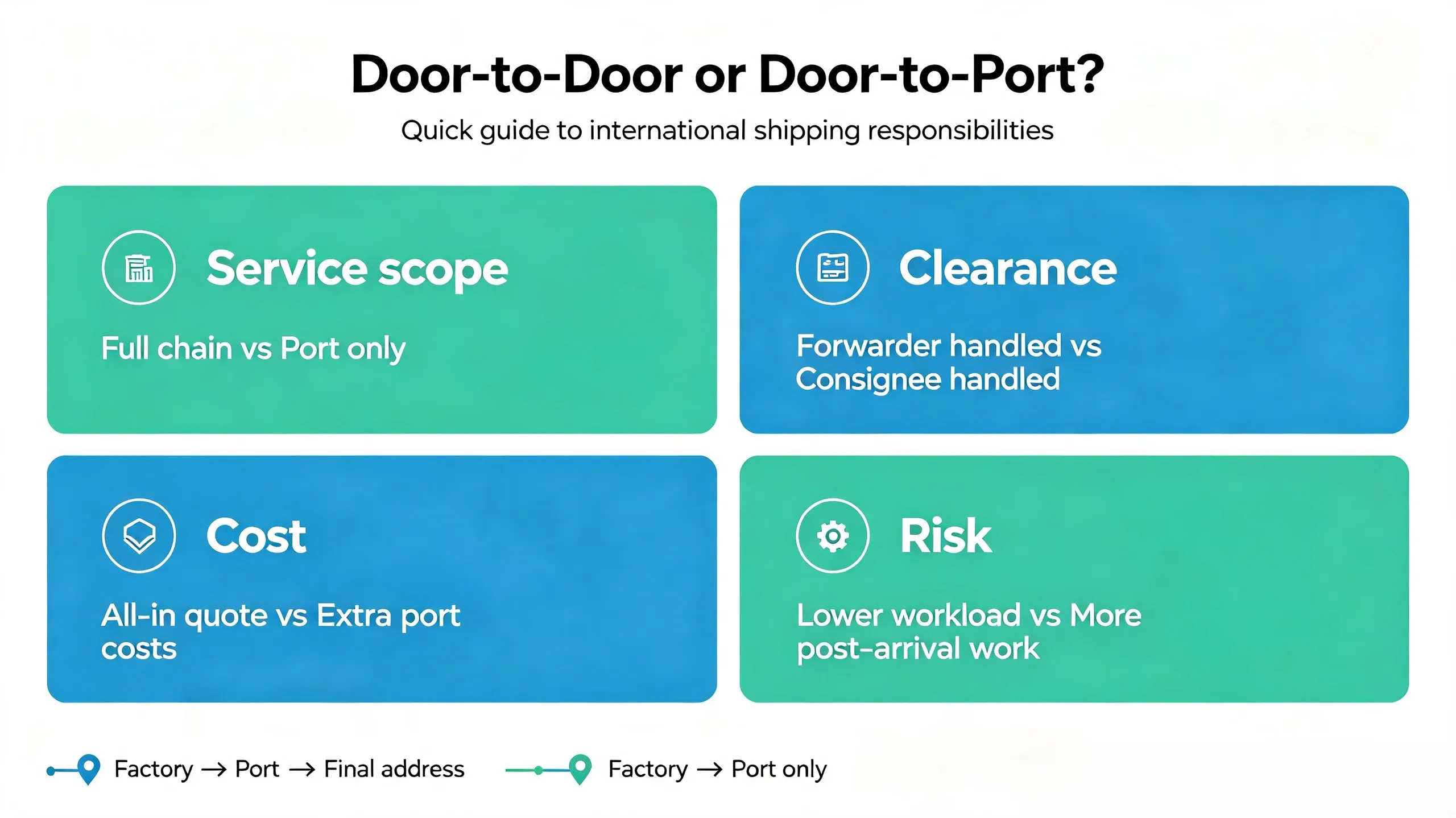
· Door-to-door: Forwarder manages both export and import customs. Receivers do not need to contact customs or hire separate brokers under normal conditions.
· Door-to-port: Only export filing is covered. The consignee must prepare all import papers, hire brokers, pay all taxes and resolve all customs issues independently.
04 Cost Structure
Door-to-door adopts all-in bundled pricing. The total quote is higher upfront, yet transparent with almost no hidden extra charges during whole international shipping.
Door-to-port has a low initial quotation, but numerous unplanned costs pop up after cargo arrives: clearance fee, import duty, port surcharges, storage and local delivery. Total landed cost often surges out of control.
05 Risk Division
Door-to-door: Logistics carrier bears cargo risks until final delivery. Damages, clearance delays and transit troubles are handled by the forwarder, greatly lowering risks for buyers and sellers.
Door-to-port: All risks shift to consignee after cargo unloads at port. Buyers take responsibility for clearance failure, long-term storage fines, post-unloading damage and late pickup penalties.
06 Best Suitable Scenarios
Door-to-Door Fits:
New importers, small-medium enterprises, Amazon FBA inbound, e-commerce parcels, personal goods, LCL consolidated freight shipping, buyers who want to avoid complicated cross-border paperwork.
Door-to-Port Fits:
Senior large importers with fixed customs brokers, full FCL container shipments, low-value bulk goods, enterprises with dedicated logistics teams to control landed cost via self-arranged clearance & delivery.
Final Thought
To sum up, door-to-door one-stop international shipping trades slightly higher fixed cost for zero trouble and full risk coverage. Door-to-port seems cheap at first glance, yet brings heavy post-arrival workload and unpredictable extra expenses. Match the freight shipping mode to your team’s operation capacity, and you can effectively avoid hidden losses in global shipping.
If you need customized freight shipping plans or consultation on door-to-door / door-to-port solutions, feel free to contact us: [email protected] Follow our blog to grab more practical cross-border logistics tips.
Contact Us