
Foreword
Every Amazon seller faces a classic logistics dilemma: ship directly to FBA or use transit storage?
Direct shipping is fast but rigid, easily hitting Amazon’s storage limits and causing out-of-stock disasters. Self-built warehouses are flexible but costly, burning cash on rent, labor and management fees. Third-party logistics is customizable but lacks Amazon’s prime-level delivery and after-sales support.
This is exactly where FBA transit temporary storage shines. It acts as a flexible buffer station for cross-border inventory. Today we break down what FBA transit storage is, how it differs from other shipping models, and its real pros and cons to help you pick the most cost-effective logistics solution.
01 What Is FBA Transit Storage?
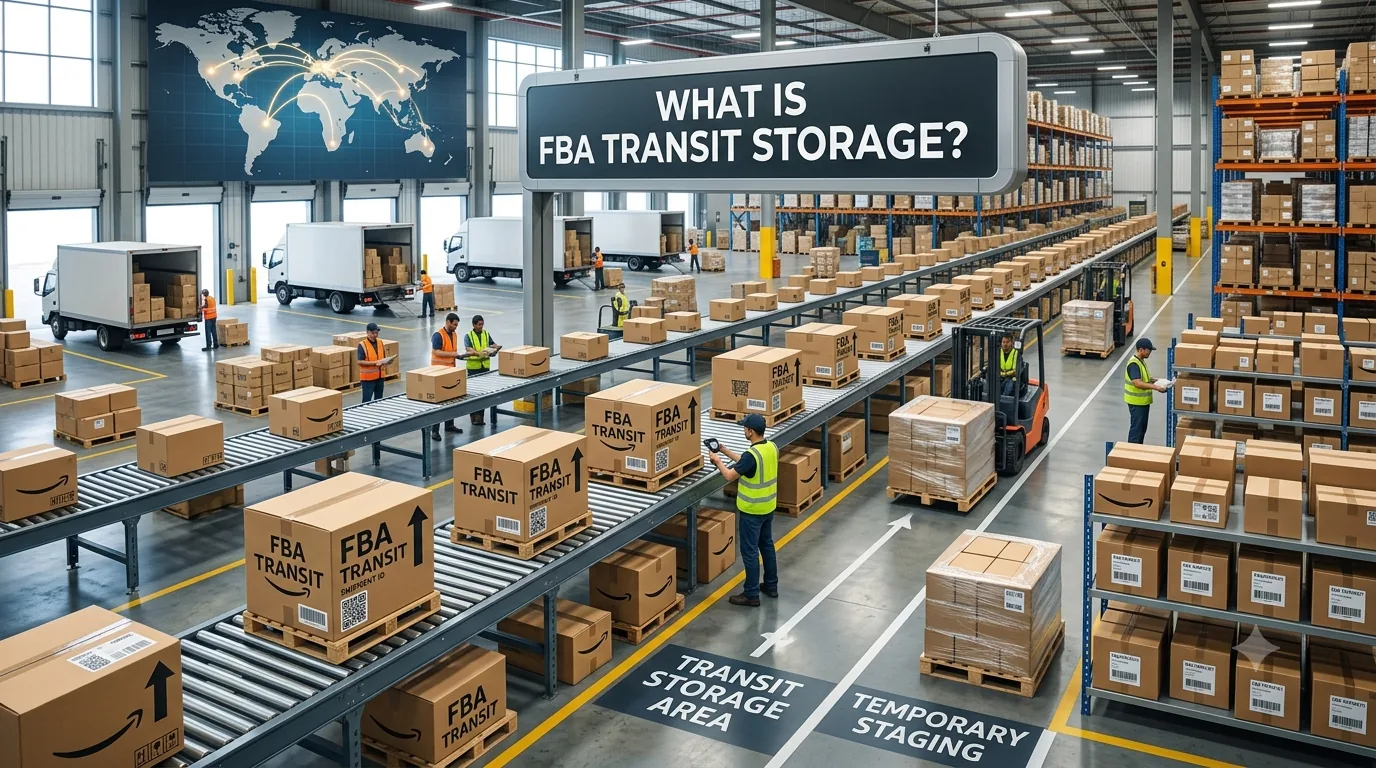
Simply put, FBA transit storage is an overseas inventory buffer mode for Amazon sellers.
Instead of sending goods directly from China to Amazon FBA warehouses in one go, you first ship bulk inventory to a standardized overseas transit warehouse. After unified sorting, warehousing and inventory counting, you arrange batch replenishment and delivery to official FBA warehouses according to sales velocity, inventory levels and Amazon’s storage quota.
It’s essentially a pre-FBA stocking station, solving the pain points of rigid direct shipping, FBA capacity limits and high official warehousing costs.
02 FBA Transit Storage vs Direct Shipping
Direct Shipping Pros
No intermediate warehousing links, saving temporary storage and operational fees. The process is straightforward, suitable for small-batch trial orders and low-volume stable products.
Direct Shipping Cons
Zero inventory flexibility. It’s hard to coordinate shipping plans for multi-ASIN and multi-batch inventory. Once Amazon limits your warehouse capacity, you cannot replenish goods in time, easily leading to stockouts. Disordered batch shipping also increases the risk of inventory backlog and waste.
FBA Transit Storage Advantages
Unified warehousing and centralized inventory management make stock counting and shipping planning extremely accurate. Sellers can flexibly adjust replenishment batches according to real-time sales data, effectively avoiding stockouts during peak seasons and overstocking for slow-moving products. It perfectly fixes all the drawbacks of direct shipping.
03 FBA Transit Storage vs Self-Built Warehouse
Self-Built Warehouse Pros
Full independent control over inventory and shipping schedules. Extremely flexible for personalized operations and brand packaging upgrades, helping with independent brand building and user experience optimization, suitable for large-scale mature sellers.
Self-Built Warehouse Cons
High threshold and heavy costs. Warehouse rent, site renovation, staff salaries and daily operation management bring sustained financial pressure. Sellers also need to invest a lot of time and energy in logistics scheduling, which diverts energy from core store operation.
FBA Transit Storage Advantages
Zero operation burden for sellers. The professional team takes charge of all warehouse management, sorting and scheduling work. Sellers only need to focus on product procurement and store operation. It greatly reduces operational costs and management thresholds, ideal for most medium and small cross-border sellers.
04 FBA Transit Storage vs 3PL Third-Party Logistics
Core Advantages of FBA Transit Storage
1. Lower comprehensive logistics cost
The whole process only covers China-to-overseas warehouse transportation, without expensive last-mile delivery fees. Bulk shipping further reduces unit freight, saving 15%-25% of logistics costs compared with pure third-party full-link services.
2. Faster overall fulfillment speed
Relying on Amazon’s mature global warehousing and distribution network, goods can be quickly warehoused and delivered. The standardized system ensures on-time delivery and cargo safety, with far more stable timeliness than ordinary 3PL.
3. Professional and trustworthy after-sales service
Supported by Amazon’s official system, it provides standardized return and exchange processing. The professional customer support team solves after-sales problems efficiently, greatly reducing seller after-sales pressure and negative review risks.
Core Advantages of 3PL Logistics
1. Highly customizable services
Third-party logistics can provide personalized solutions such as customized packaging, label replacement and targeted scheduling according to seller needs, with more flexible service forms.
2. Wider global coverage
3PL covers more countries and regions, supporting diversified transportation modes including sea, air and railway, helping sellers expand global sales channels.
3. Flexible and competitive pricing
Large-scale third-party logistics providers have richer resource advantages, able to offer more competitive prices and diversified service packages, suitable for sellers with multi-channel layout.
05 The Real Disadvantages of FBA Transit Storage
No logistics model is perfect. FBA transit storage also has obvious drawbacks that sellers must know:
1. Extra transit warehousing & handling fees
Compared with direct shipping, transit storage generates additional temporary storage, sorting and handling costs, increasing short-term capital expenditure.
2. One more logistics link & slight timeline delay
Increased warehousing and transshipment links bring a small amount of time delay and tiny cargo loss risks, requiring reliable forwarder support.
3. Low flexibility for personalized operations
Standardized warehousing processes cannot support highly personalized operations such as private brand packaging and customized labeling as flexibly as self-built warehouses or 3PL.
Final Thought
FBA transit storage is not a universal solution, but it is the most balanced and cost-effective logistics choice for most Amazon sellers.
It avoids the rigidity of direct shipping, the high cost of self-built warehouses, and the instability of ordinary third-party logistics. It perfectly balances cost, efficiency and after-sales guarantee.
For peak season stocking, capacity limit relief and slow-moving inventory regulation, FBA transit storage is always the top practical strategy. Choosing the right logistics model according to product attributes and sales rhythm is the core of stable cross-border operation.
If you have any questions or need assistance with your logistic shipment from China, please don’t hesitate to reach out to us. We are committed to providing the support you need: [email protected]