
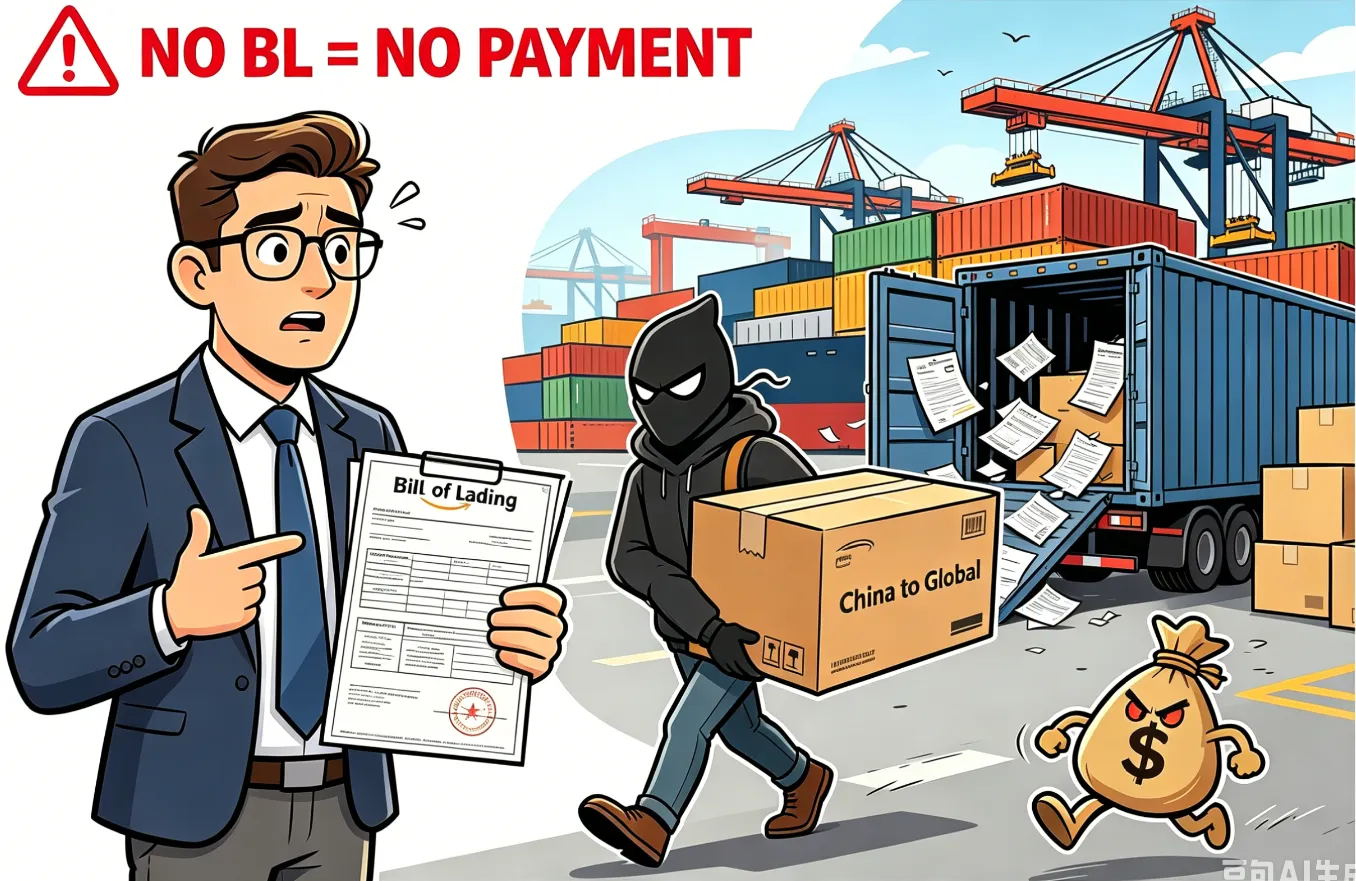
If you’re an Amazon FBA seller, Walmart or Shopify cross-border merchant, or a manufacturing company shipping goods from China to global markets, you’ve definitely heard of all kinds of logistics pitfalls. Among all the supply chain nightmares, non-bill-of-lading cargo release (commonly known as no BL release) is undoubtedly the most ruthless “money thief” in international shipping.
Many newbie exporters and even seasoned sellers have fallen victim to this issue. You ship out goods perfectly, wait patiently for payment, only to find out the buyer has already picked up all the cargo—without paying a single cent. Today, we’re going to demystify this high-risk logistics trap in plain, funny terms and share actionable tips to keep your money and goods safe in all your China-to-global logistics shipments.
What Exactly Is Non-Bill-of-Lading Cargo Release?
Simply put, the bill of lading (BL) is the absolute ownership certificate of goods in ocean freight and international shipping. It’s like the exclusive access key to your cargo. According to international maritime rules and China’s Maritime Law, carriers (shipping lines or forwarders) are only allowed to release goods against the original bill of lading.
Non-bill-of-lading cargo release means the carrier illegally releases the goods to the consignee with only a letter of guarantee, copy documents or even no valid certification at all, without taking back the original BL. To put it bluntly: your goods are taken away by others, but you still hold the valid ownership certificate with no money in your pocket. This is the most typical and damaging compliance risk in cross-border shipping.
Why Does No BL Release Happen? 4 Common Culprits
This logistics accident never happens without a reason. Most cases stem from human greed, regulatory loopholes and irregular operations in international freight forwarding:
1. Malicious buyers: Some overseas consignees take advantage of long-term cooperative relationships with local carriers or forge shipping documents to pick up goods maliciously, premeditating payment default.
2. Loose destination port policies: Multiple high-risk countries including Brazil, Angola and Nigeria allow customs clearance and cargo pickup with a copy of BL, leaving huge loopholes for fraud.
3. Irregular carrier operations: Small shipping lines and unprofessional forwarders often take risks to speed up port turnover or cater to buyer demands, illegally releasing goods in violation of maritime regulations.
4. Chaotic freight agent management: Unregulated small freight forwarders may collude with buyers or send wrong cargo release instructions due to operational errors, causing cargo loss for exporters.
The Terrible Risks of Non-Bill-of-Lading Release
For cross-border sellers and manufacturers engaged inChina cross-border logistics, the loss caused by no BL release is almost fatal:
First, you face empty cargo and empty payment. The goods are fully picked up by the buyer, but you fail to receive the balance payment, with extremely high subsequent recovery costs. Second, cross-border litigation is time-consuming, expensive and difficult to collect evidence, making legal rights protection extremely tough. Worse still, malicious buyers will take this opportunity to force price cuts, default on follow-up orders, and cause continuous credit risks for your business.
6 Practical Ways to Avoid No BL Release (100% Practical for Sellers)
As a professional China warehouse and freight forwarding service provider serving Amazon, Walmart and Shopify global sellers, Easy China Warehouse has summarized a full-set risk control system after serving thousands of cross-border clients. These methods are far more reliable than blind luck:
1. Strictly control bill of lading circulation, stick to payment-first rule
Never send out the original BL before receiving full payment! Many sellers take risks for order volume and release telex release instructions in advance, which is the biggest hidden danger. If you cooperate with Easy China Warehouse, our professional logistics team will strictly follow the “full payment before cargo release” rule, and double-check payment records before any telex release operation, completely avoiding operational loopholes.
2. Choose formal and reliable carriers, reject small irregular forwarders
Small shipping agents often have irregular operations and weak risk awareness, while top shipping lines like Maersk and COSCO have standardized management. We exclusively cooperate with top-tier formal carriers all year round. Different from small forwarders with disorderly management, we will clearly add the “original BL only for cargo release” clause in the transportation contract and set high liquidated damages to bind carriers’ behaviors.
3. Adopt digital maritime technology to prevent document tampering
We support blockchain bill of lading services via platforms like TradeLens. Digital encrypted BLs cannot be forged or tampered with, effectively cutting off fraudulent cargo pickup. Meanwhile, we providereal-time global cargo tracking for all China outbound shipments, letting you monitor cargo status at destination ports 24/7.
4. Purchase export credit insurance to hedge losses
We assist clients in cooperating with Sinosure to purchase professional export credit insurance, which fully covers cargo losses caused by non-bill-of-lading release. The insurance policy can also be used for financing guarantee to relieve your capital pressure.
5. Add legal protection clauses in trade contracts
We suggest all sellers add atitle retention clause in trade contracts: The ownership of goods belongs to the seller until the buyer pays the full payment. Meanwhile, prioritize Chinese courts or CIETAC for dispute resolution to reduce the difficulty of cross-border rights protection.
6. Upgrade risk control for high-risk countries
For high-risk regions where no BL release frequently occurs (Brazil, Nigeria, Angola, etc.), we will suggest clients adopt 100% prepayment or L/C settlement, and provide exclusive China-side designated forwarder cargo control services at destination ports to guard your cargo safety.
What to Do If You Encounter Non-Bill-of-Lading Release?
Don’t panic! Take immediate action to stop losses: First, fully collect evidence including original BL, trade contracts, payment records and carrier cargo release proofs. Then implement double accountability: sue the carrier for breach of transportation contract to claim cargo value, and sue the buyer for breach of trade contract to recover payment and interest. We can also assist you in applying for property preservation to freeze the relevant assets of the counterparty and maximize your interests.