
Foreword
If you’ve been shipping sea freight, you’ve definitely heard this question countless times: “Do we need original BL or telex release?”
For new sellers, Telex Release sounds like some high-tech complicated shipping term. But in reality, it’s simply the most common, fastest, and most controversial way to release sea cargo in modern international trade.
Original bills of lading are like “physical cash” — safe but slow and easy to lose. Telex Release is like “mobile payment” — instant, convenient, but with hidden risks if you don’t understand the rules.
Today we fully decode Telex Release: what it is, how to apply for it, and its real pros and cons that every shipper must know.
01 What Is Telex Release Exactly?
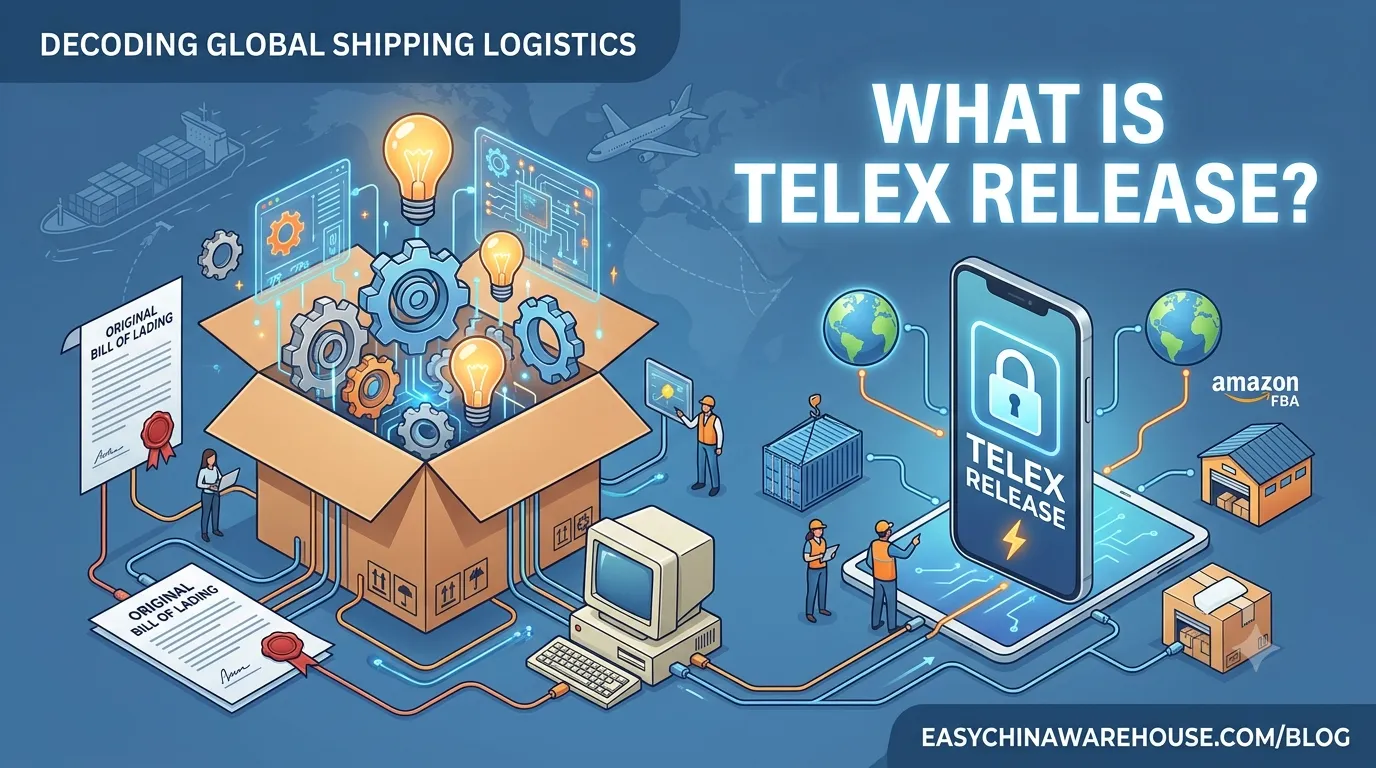
Telex Release is an electronic cargo release method in ocean freight shipping.
In the traditional shipping model, the carrier issues a paper original Bill of Lading (BL). The consignee must present the physical original BL at the destination port to pick up the goods.
Telex Release completely changes this logic:
After the shipper applies, the shipping line sends an electronic release instruction to the destination agent via email or system notification. The port releases the cargo to the consigneewithout any original paper document.
Simply put: No paper, no courier waiting, cargo released purely electronically.
02 How Does Telex Release Work? (Full Process)
The whole telex release process is simple and efficient, with five clear steps:
Step 1: Shipper applies
Before or after vessel departure, the shipper submits a telex release application and provides complete consignee information to the carrier or forwarder.
Step 2: Carrier confirms
The shipping company verifies the application and confirms no original BL has been issued or has been surrendered.
Step 3: Send telex instruction
The carrier sends official electronic release orders to the destination port agent.
Step 4: Cargo release
The destination agent checks the instruction and releases the goods directly to the consignee.
Step 5: Keep official records
All electronic logs and release records are permanently reserved for traceability and customs inquiry.
03 The Bright Side: Pros of Telex Release
Telex Release has become the mainstream shipping method for a reason — it solves most pain points of original bills of lading.
1. Super fast cargo release
No need to wait for paper BL printing, courier delivery, or overseas mailing. The goods can be picked up immediately after vessel arrival, avoiding port detention and demurrage fees.
2. Save time and cost
Completely removes international express fees and mailing cycles for original documents, greatly reducing document processing costs.
3. Avoid document loss risks
Original BL is extremely troublesome if lost or stolen. Telex release eliminates physical document risks entirely.
4. Higher overall logistics efficiency
Simplifies the entire document delivery and pickup process, perfectly matching the fast-paced rhythm of modern cross-border trade.
04 The Dark Side: Cons & Hidden Risks
Telex Release is convenient, but not risk-free. Many sellers suffer losses due to blind trust in telex release.
1. Higher security & fraud risks
Without physical original BL as the ownership voucher, once wrong release or fraud occurs, the correction and rights recovery process is extremely difficult.
2. Partial legal recognition issues
A small number of countries and regions do not fully recognize electronic telex release documents. In extreme trade disputes, telex records may have weaker legal validity than original bills.
3. Reliant on stable communication & system
If the carrier’s system fails or communication delays occur, telex release instructions may be delayed, resulting in cargo pickup delays.
4. Strict credit dependence
Telex release means you release cargo ownership in advance. It requires high mutual trust between buyers and sellers. It isnot recommended for new customers or high-risk orders.
Final Thought
Telex Release is a mature, efficient, and mainstream cargo release method in modern ocean freight. It abandons the cumbersome paper-based model and greatly speeds up global cargo circulation.
However, convenience always comes with trade-offs. Original BL is “safe but slow”, while Telex Release is “fast but risky”.
The most professional shipping logic is: use telex release for trusted long-term customers, and stick to original BL for new clients or high-value orders to control risks.
If you have any questions or need assistance with your logistic shipment from China, please don’t hesitate to reach out to us. We are committed to providing the support you need: [email protected]