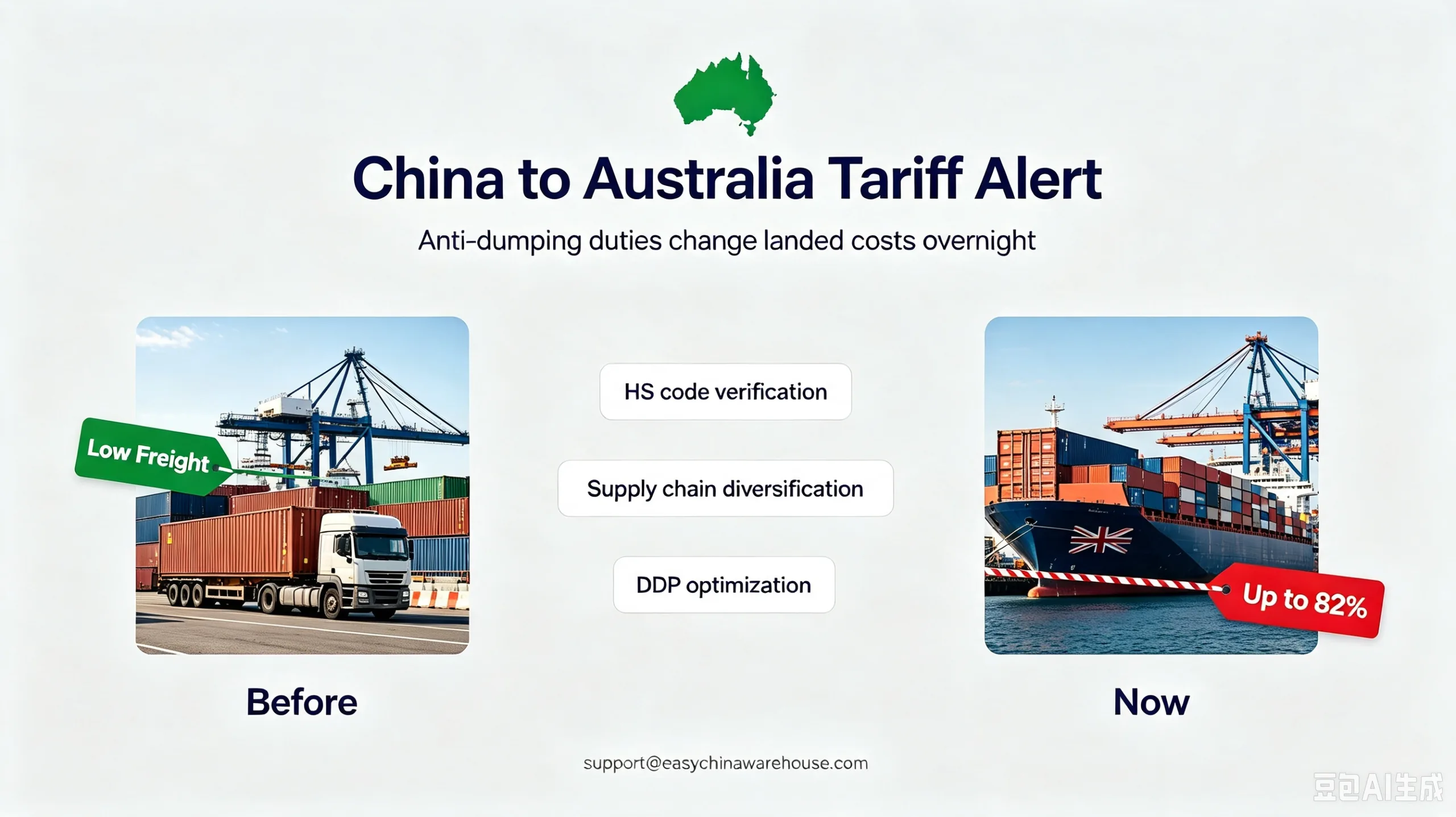
The landscape of international trade is shifting rapidly, and for businesses sourcing from China, the latest news from Canberra is a wake-up call. The Australian government has recently moved forward with significant anti-dumping duties on Chinese imports, with some tariffs reaching as high as 82%.
For Amazon FBA sellers, Walmart Marketplace vendors, and independent Shopify store owners, these developments could mean the difference between a healthy profit margin and a shuttered business. In this guide, we break down what is happening, which industries are affected, and how you can protect your supply chain.
What is Anti-Dumping and Why is Australia Targeting China?
“Dumping” occurs when a foreign manufacturer exports a product to another country at a price lower than its normal value (often lower than the price in its home market). To protect local industries, the Australian Anti-Dumping Commission imposes duties to level the playing field.
Currently, several key Chinese manufacturing sectors are under the microscope. While steel and aluminum have historically been the focus, the scope is widening to include consumer goods and industrial components that many cross-border e-commerce sellers rely on.
The Financial Impact: From 10% to 82%
The scale of these tariffs is staggering. When a product is hit with an 82% tariff, the landed cost nearly doubles. For a manufacturing company or a retailer, this isn’t just a minor tax—it’s a disruptive event that requires an immediate pivot in supply chain management.
Key Sectors Currently Affected:
- Steel and Aluminum Products: Including extrusions and structural sections.
- Chemicals and Resins: Used in various plastic manufacturing processes.
- Construction Materials: Impacting large-scale importers and developers.
- Consumer Goods: Keep a close eye on furniture and paper products, which have faced scrutiny in recent trade probes.
How This Affects Cross-Border E-commerce Sellers
If you are shipping goods from China to the Australian market via Amazon FBA or direct-to-consumer (DTC) models, these tariffs can hit your “landed cost” unexpectedly.
- Increased COGS: Your Cost of Goods Sold will skyrocket if your HS Codes fall under the new duty brackets.
- Customs Delays: Increased scrutiny on Chinese shipments can lead to longer holding times at Australian ports like Sydney, Melbourne, and Brisbane.
- Pricing Pressure: Passing an 82% cost increase to the customer is often impossible, forcing sellers to find new ways to optimize their international shipping and logistics.
Strategies to Mitigate the Risk
As a leader in China-to-Australia logistics, we recommend the following steps for all international retailers:
1. Verify Your HS Codes
Don’t guess. Ensure your manufacturer is using the correct Harmonized System (HS) code. Sometimes, a slight variation in material or use-case can classify a product under a code that is not subject to anti-dumping duties.
2. Consider “China Plus One” Sourcing
While China remains the world’s factory, many Shopify and Walmart sellers are diversifying their sourcing to countries like Vietnam, Thailand, or India for specific product lines to avoid the “Made in China” tariff spikes.
3. Optimize Your Logistics and Warehousing
Utilizing a China warehouse and fulfillment center allows you to consolidate shipments and perform quality control before goods leave the country. This ensures you aren’t paying 82% tariffs on defective goods that can’t be sold.
4. Consult with a Freight Forwarding Expert
Navigating Australian customs law requires expertise. Partnering with a logistics provider that understands the nuances of DDP (Delivered Duty Paid) vs. DAP (Delivered at Place) shipping can save you thousands in unexpected fees.
Final Thoughts
The era of “cheap and easy” shipping from China to Australia is becoming more complex. However, with the right information and a robust logistics partner, cross-border sellers can still thrive. Whether you are a manufacturing company looking to move bulk freight or an Amazon seller scaling your brand, staying ahead of tariff changes is the key to longevity.
Need help navigating the new Australian tariffs? At Easy China Warehouse, we specialize in helping international businesses optimize their supply chains. From secure warehousing in China to efficient international shipping, we ensure your goods reach their destination without the headache.