
If you are a cross-border e-commerce seller on Amazon, Walmart, or Shopify, or a manufacturing company relying on timely deliveries from China, you’ve likely noticed a sharp shift in the logistics landscape this month.
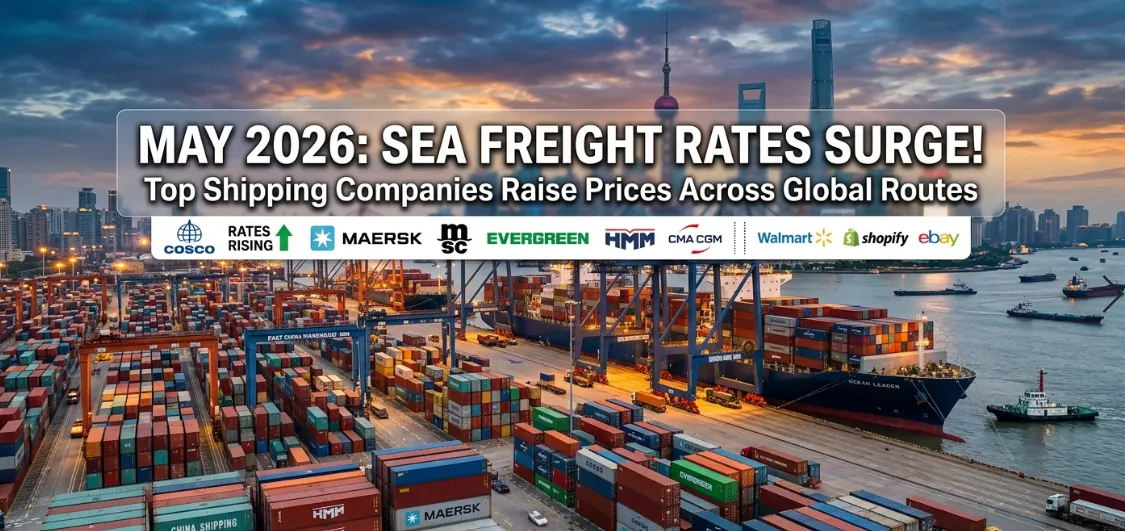
As of May 2026, the industry is witnessing a significant surge in sea freight rates. Major global shipping lines have announced price hikes across multiple key routes, including the Trans-Pacific and Asia-Europe lanes. For businesses importing goods from China, understanding these changes is critical to maintaining a healthy bottom line.
What is Driving the May 2026 Rate Hikes?
The current spike isn’t caused by a single factor, but rather a “perfect storm” of logistics challenges. Top shipping companies have implemented General Rate Increases (GRIs) and Peak Season Surcharges (PSS) earlier than usual this year. Key drivers include:
Equipment Shortages: A sudden deficit of empty containers in major Chinese export hubs like Ningbo and Shanghai has driven up the cost of securing space.
Port Congestion: Increased volume at major entry ports in the US West Coast and Europe has led to longer vessel turnaround times, tightening available capacity.
Shift in Demand: Many cross-border e-commerce sellers are “front-loading” their inventory to avoid potential disruptions later in the year, leading to a massive spike in bookings.
Impact on Global Shipping Routes
While almost all international lanes are affected, the most significant price adjustments are seen in:
China to US West/East Coast: A vital route for FBA sellers and big-box retailers.
China to Europe: Increasing transit times and fuel surcharges are pushing TEU (Twenty-foot Equivalent Unit) prices to year-highs.China to Southeast Asia: Even shorter routes are feeling the pressure of limited vessel availability.
How E-commerce Sellers and Manufacturers Can Respond
Rising ocean freight costs can quickly eat into the profit margins of a Shopify store or a manufacturing contract. Here is how you can mitigate the impact:
Book in Advance: With space at a premium, we recommend booking your shipments at least 3–4 weeks before your cargo-ready date.
Consider Multi-Modal Solutions: If sea freight becomes too slow or expensive, look into sea-air combined transport or specialized small-parcel lines to keep your Amazon inventory levels stable.
Optimize Packaging: Reducing the volumetric weight of your goods can help you fit more into a single container, lowering your “cost per unit.”
Partner with a Reliable China Warehouse: Utilizing a professional China Warehouse and Fulfillment service allows you to consolidate orders, store goods near the port, and ship only when rates are most favorable.
Looking Ahead
While the May 2026 surge has caught many off guard, staying informed and agile is the best way to navigate the volatility of international shipping from China. By diversifying your carrier options and optimizing your supply chain, you can ensure your products reach your customers without breaking the bank.
Need a quote or a logistics strategy for your next shipment? At Easy China Warehouse, we specialize in helping Amazon sellers, retailers, and manufacturers streamline their China-to-World logistics. Contact us today to see how we can help you navigate the current freight market.