
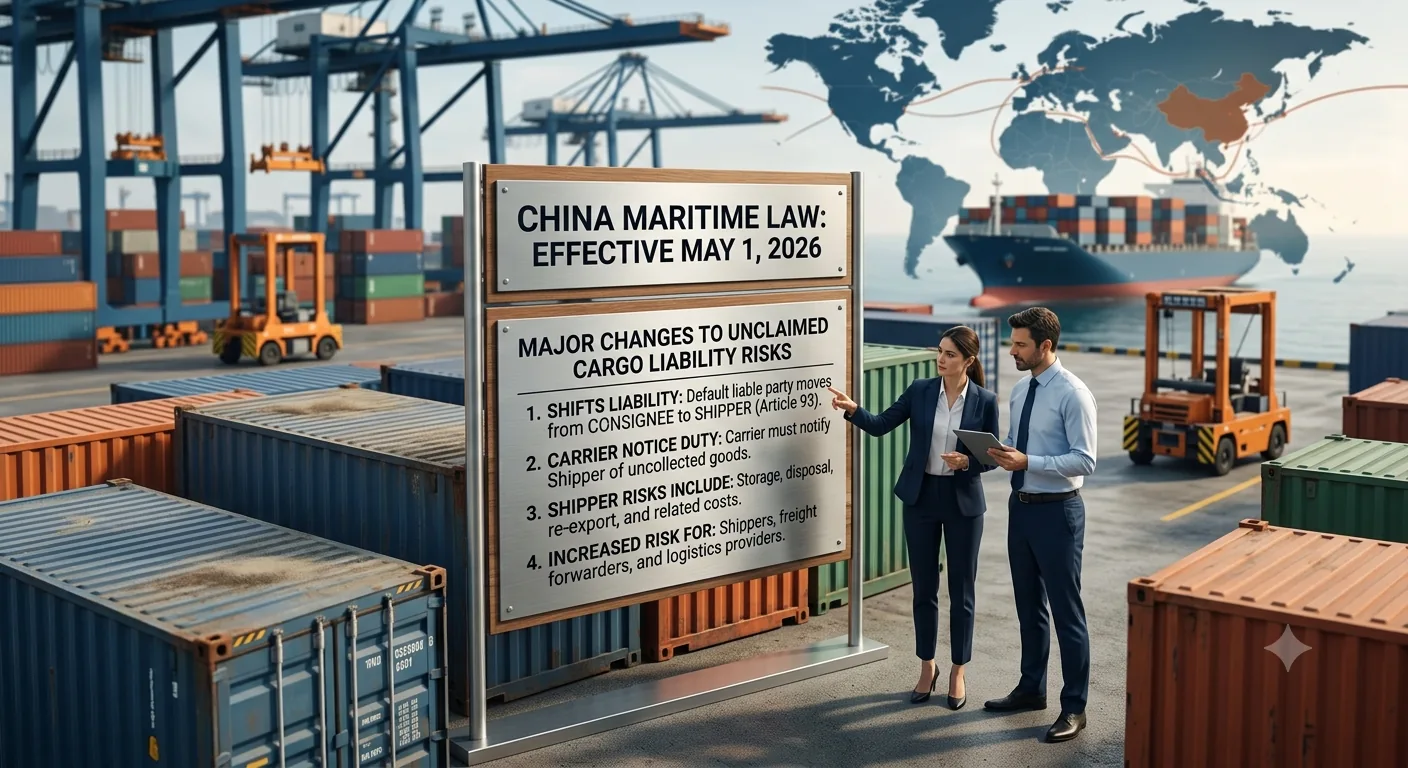
Starting from May 1, 2026, the newly revised Maritime Law of the People’s Republic of China will be officially enforced. Article 93 of the revised law completely changes the 30 year old maritime liability rule, shifting the full responsibility and fees for undelivered goods at destination ports from overseas buyers (consignees) to Chinese shippers and exporters. This marks a fundamental restructuring of international trade risk allocation.
This update directly affects all Amazon cross-border sellers, foreign trade factories, freight forwarders and FOB shipment businesses. Understanding liability adjustments in advance can avoid huge unexpected fees and legal disputes.
1,Core Comparison Between Old & New Maritime Regulations
Old Rules (Applied for 30 Years)
- Liability subject: Consignee (overseas buyer) bears all risks and charges for unattended cargo
- Low default risk for Chinese exporters and booking parties
New Rules (Effective May 1, 2026)
- Liability subject: Shipper (Chinese seller / booking party) takes primary responsibility
- Exception: Responsibility only transfers back to consignee if the buyer has taken delivery and later refuses to collect goods
As long as the consignee never picks up the goods, carriers can directly claim all fees and losses from domestic shippers
2,Huge Impact on Foreign Trade Sellers: FOB Terms Are No Longer Safe
For decades, sellers believed risks transfer once goods cross the ship’s rail under FOB trade terms. The new Maritime Law breaks this common perception entirely.
If overseas buyers refuse to collect goods at destination ports, domestic sellers as shippers must pay all resulting charges, including:Container detention fees, port storage fees, warehouse charges, cargo disposal fees, return shipping costs and destruction expenses.
Risk Prevention Suggestions for Sellers
- Clarify buyer’s pickup obligations and default penalties clearly in sales contracts
- Require bank guarantees or delivery security from overseas customers
- Prioritize letter of credit settlement instead of long credit terms
- Purchase export credit insurance and logistics liability insurance to cover unclaimed cargo losses
3,Rising Risks for Freight Forwarding Companies
The new law clearly distinguishes contractual shippers (booking parties) and actual shippers (factories and suppliers). All undelivered cargo liabilities fall on contractual shippers.
If freight forwarders book space in their own name and are identified as contractual shippers, they will become the first liable party claimed by shipping lines directly.
Countermeasures for Logistics Agents
- Sort out all ongoing orders and focus on high-risk shipping routes
- Sign supplementary agreements with customers to clarify who bears abandoned cargo fees
- Add special liability clauses for unattended goods in booking contracts
- Establish early warning systems to monitor cargo arrival status and respond quickly to abnormal situations
4,Other Key Updates of The Revised Maritime Law
- Legally validates electronic transport documents
- Standardizes liability boundaries of actual carriers
- Strengthens compensation standards for marine ecological damage
- Adds clauses against unfair maritime trade behaviors
- Matches global trends of shipping digitalization and green low-carbon development
5,Pre-May 1 Action Checklist for All Enterprises
- Review all transportation and agency contracts to comply with new legal liability rules
- Send official written notices to overseas buyers, informing updated pickup responsibilities
- Verify existing insurance coverage for destination port abandonment fees and indirect losses
- Conduct internal legal training for sales, operation and customer service teams to abandon outdated operating habits
Conclusion
Article 93 establishes the principle of who books cargo, who takes responsibility. The new Maritime Law brings short-term operational pressure to Chinese exporters and logistics companies, but also drives the industry to optimize risk control, improve customer quality and build professional compliance barriers.
All foreign trade and cross-border logistics enterprises should adjust contracts, payment terms and risk management systems immediately before the law takes effect.If you have any questions or need assistance with your logistic shipment from China, please don’t hesitate to reach out to us. We are committed to providing the support you need: [email protected]