Login

Port Congestion’s Hidden Bill: Calculating the True Cost Beyond Demurrage
December 30, 2025
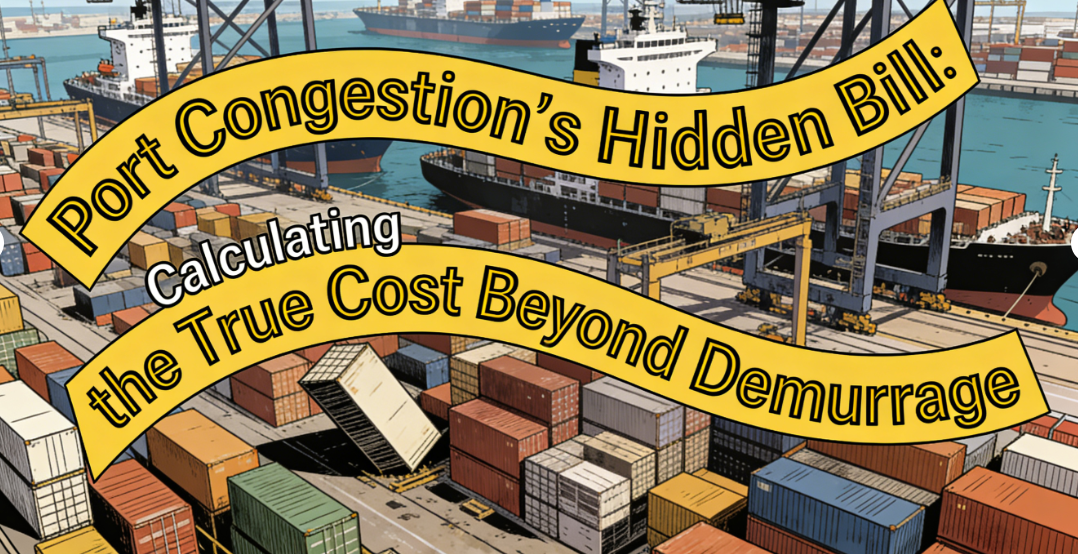
If you’re sourcing products from China for your e-commerce business on Amazon, Walmart, or Shopify, you’re acutely aware of supply chain headaches. Port congestion has become a constant headline. Most importers watch demurrage and detention charges like hawks—those fees from carriers and terminals when containers aren’t moved in time. But what if we told you that demurrage is just the tip of the financial iceberg?For cross-border sellers, manufacturers, and retailers, the true cost of port delays is a hidden bill, one that silently erodes margins and disrupts operations. Let’s pull back the curtain and calculate the full impact on your international shipping from China.
The Obvious Cost: Demurrage & Detention
Yes, we must address it. When your container is stuck at a congested port like Shenzhen, Ningbo, or Shanghai, the clock starts ticking. These port congestion fees are direct hits to your logistics budget. But they are quantifiable, predictable, and often fought over with your freight forwarder. The real danger lies in the costs you don’t see on the carrier’s invoice.
The Hidden Line Items: Your True Cost of Port Delays
1. Capital in Transit, Stuck and Idle
Every day your shipment is delayed is a day your capital is frozen. This isn’t just about the goods’ value; it’s about inventory turnover. For an Amazon FBA seller, slow turnover means missed sales velocity, potential stockouts, and lost buy box ownership. The true cost includes the opportunity cost of not being able to reinvest that capital into your next best-selling product.
2. The Bullwhip Effect on Warehousing
Delayed containers don’t just disappear; they eventually all arrive at once in a chaotic surge. This creates a warehousing nightmare:
- Overtime Labor Costs: Your US warehouse or 3PL must pay extra to handle the unexpected deluge.
- Double-Handling: Chaos leads to inefficient put-away, increasing labor costs.
- Short-Term Overflow Storage: You may need to pay premium rates for emergency storage space. If you use a service like Easy China Warehouse for consolidation in China, even that planning can be upended by unpredictable sailing schedules.
3. Sales & Market Penalties
This is where the pain becomes acute for e-commerce sellers.
- Stockouts & Lost Revenue: Late inventory means empty shelves on your Shopify store or Walmart Marketplace listings.
- Expedited Shipping Overdrive: To recover, you might air freight a portion at 5-10x the sea freight cost, destroying your profit margin.
- Customer Dissatisfaction: Missed delivery promises lead to negative reviews, returns, and diminished brand loyalty.
4. Operational Inefficiency & Planning Paralysis
Port uncertainty turns supply chain management into a guessing game.
- Wasted Management Time: Your team spends hours tracking containers and firefighting instead of optimizing.
- Inefficient Production Planning: Manufacturers and retailers struggle to align production cycles in China with unreliable transit times, leading to either excess or insufficient safety stock.
The Calculation: Adding Up Your Hidden Bill
Let’s move beyond the container shipping invoice. For a single delayed 40-foot container (with $50,000 worth of goods) stuck for 14 extra days:
- Demurrage/Detention: $2,000 (the visible cost)
- Capital Opportunity Cost: (Based on your cost of capital or missed ROI) – Let’s estimate: $200
- Warehousing Chaos Surcharge: (Overtime, overflow) – Estimate: $800
- Expedited Logistics & Stockout Penalty: (Partial air freight, lost sales) – Estimate: $3,000+
- Management & Planning Drain: (Hours spent) – Estimate: $500
Total Hidden + Visible Cost: $6,500+ vs. the perceived $2,000.Suddenly, that demurrage fee is only 30% of your total expense.
How to Mitigate the True Cost: A Proactive Strategy
- Diversify Your Gateways: Don’t rely solely on major hubs. Discuss with your China logistics partner the use of alternative ports like Guangzhou, Qingdao, or even land-sea intermodal routes.
- Embrace Consolidation (CCLC): Using a China consolidation warehouse service allows you to ship LCL (Less than Container Load) but with greater control. They can consolidate goods from multiple suppliers, wait for optimal sailing, and ship as one, reducing your per-unit risk and demurrage liability.
- Buffer Everything Realistically: Revise your inventory planning. Build realistic delay buffers into both your timeline and your financial forecasting. Price your products with this new shipping cost from China reality in mind.
- Transparent Partner Alignment: Work with a freight forwarder and China sourcing agent who provides proactive communication and alternative solutions, not just tracking numbers. Visibility is key to replanning.
- Consider the Total Landed Cost, Always: Make sourcing and shipping decisions based on the total landed cost—including all these hidden potential fees—not just the quoted ocean freight rate.
Conclusion: Knowledge is Power (and Profit)
For businesses engaged in global trade and cross-border e-commerce, understanding the full financial impact of port congestion is no longer optional. It’s a critical component of your supply chain resilience.
By looking beyond demurrage and calculating the true cost, you can make smarter logistics decisions, choose the right partners, and build a more robust—and profitable—operation. The goal isn’t just to ship from China; it’s to ensure your goods arrive predictably and profitably, keeping your capital fluid and your customers satisfied.
Ready to build a more resilient shipping strategy that protects you from the hidden bills? Partner with a logistics provider who understands the complete picture.