
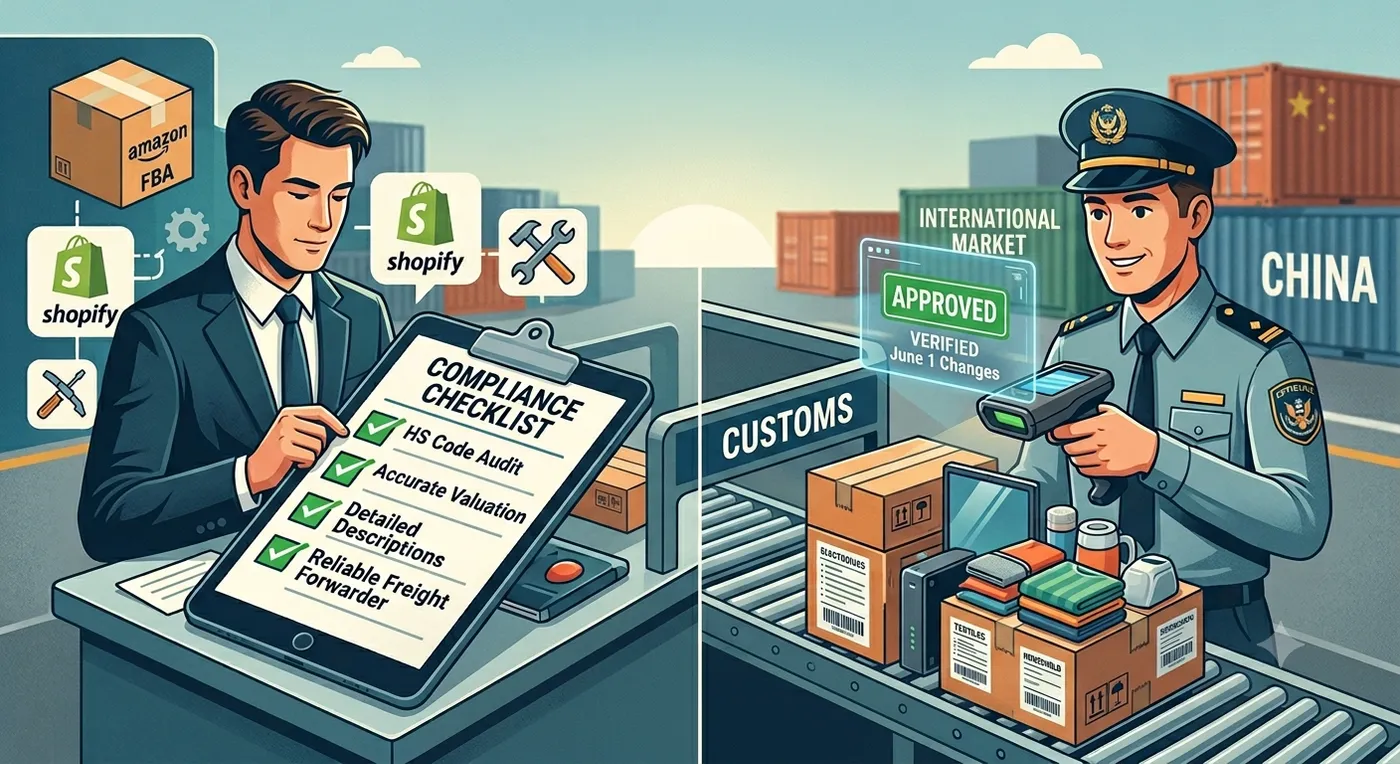
Navigating the waters of international trade requires constant vigilance. For cross-border e-commerce sellers, manufacturing companies, and retailers relying on global supply chains, staying ahead of regulatory updates is the difference between a thriving business and costly logistics nightmares.
Starting June 1, customs authorities are implementing stricter customs checks on non-mandatory goods. If your business relies on shipping goods from China to international markets like the US, Europe, or the UK, these changes will directly impact your operations.
This compliance guide breaks down what these changes mean, how they affect your specific business model, and the actionable steps you must take to avoid customs delays, unexpected penalties, and disruptions to your supply chain.
Understanding the June 1 Customs Changes
Historically, “non-mandatory goods”—items that don’t fall under strict medical, chemical, or heavy industrial regulatory categories—enjoyed a smoother, faster customs clearance process. However, to combat undervalued shipments, counterfeit products, and tax evasion, global customs authorities are tightening inspection protocols.
Starting June 1, customs agencies are shifting from random spot-checks to data-driven, systemic inspections on all categories of cargo. This means that even standard consumer products, apparel, electronics, and home goods will face rigorous scrutiny.
Key Focus Areas of the New Regulations:
- HS Code Accuracy: Authorities will meticulously verify Harmonized System (HS) codes to ensure proper tariff classification.
- True Valuation Assessments: Customs will actively cross-reference declared values with global market data to flag artificially undervalued goods (a common tactic used to lower duty payments).
- Product Description Precision: Vague descriptions like “accessories,” “clothes,” or “daily necessities” will trigger automatic rejections or manual audits.
How This Impacts Your Business
Whether you run an Amazon FBA storefront or manage supply chains for a multinational manufacturing firm, these stricter enforcement measures will impact your daily operations.
1. Cross-Border E-Commerce Sellers (Amazon, Walmart, Shopify)
For e-commerce brands utilizing Amazon FBA shipping or fulfilling orders directly via platforms like Shopify and Walmart, timing is everything. Stricter customs checks mean longer processing times at ports of entry. A delay of just a few days can result in stockouts, loss of the Amazon Buy Box, and lowered search rankings on e-commerce platforms. Furthermore, customs hold-ups lead to expensive demurrage and detention fees that eat directly into your profit margins.
2. Manufacturing Companies and B2B Retailers
If you are importing raw materials or finished products from China in bulk via Ocean Freight (FCL/LCL) or Air Freight, minor documentation errors can lead to entire containers being seized or sent to intensive examination sites. For manufacturers operating on Just-In-Time (JIT) production schedules, a customs hold can halt assembly lines entirely.
Step-by-Step Compliance Checklist for Cross-Border Shippers
To ensure your cargo moves seamlessly through international borders post-June 1, implement this compliance checklist immediately:
Audit and Validate Your HS Codes
Do not guess your product classification. Work closely with your China freight forwarder to audit your current catalog. Ensure every product is assigned the exact, up-to-date HS code matching the destination country’s tariff schedule.
Provide Detailed and Specific Commercial Invoices
Your commercial invoice must tell a clear story. Instead of writing “Plastic Toys,” write “Injection-molded PVC educational children’s blocks.” Include material composition, intended use, and clear unit quantities.
Ensure Realistic Valuation
Ensure that the declared value on your customs paperwork aligns with the actual transaction value. If you are shipping goods from China at a deeply discounted manufacturing cost, keep manufacturing agreements, proof of payment, and cost-breakdown sheets readily available to defend your valuation if audited.
Partner with an Experienced Freight Forwarder
With regulations becoming more stringent, relying on cut-rate logistics providers increases your exposure to risk. Partner with an established cross-border logistics provider who specializes in customs clearance services and understands the local nuances of both Chinese export laws and destination country import laws.
How Easy China Warehouse Helps You Stay Compliant
At Easy China Warehouse, we specialize in taking the complexity out of international logistics. We understand that compliance isn’t just about paperwork; it’s about protecting your business’s bottom line.
To help our clients navigate the June 1 changes, we offer:
- Pre-Shipment Documentation Reviews: Our team reviews your commercial invoices, packing lists, and HS codes before your goods ever leave our warehouse, catching errors before they reach customs officials.
- Seamless Amazon FBA Logistics: Optimized shipping routes and compliant preparation services to ensure your e-commerce inventory arrives at fulfillment centers without delay.
- End-to-End Tracking and Transparency: Total visibility over your supply chain so you can manage customer expectations and inventory levels with confidence.
Don’t let stricter customs checks derail your summer sales or production schedules.Contact Easy China Warehouse today to speak with our international shipping experts and ensure your supply chain remains fully compliant and completely uninterrupted.